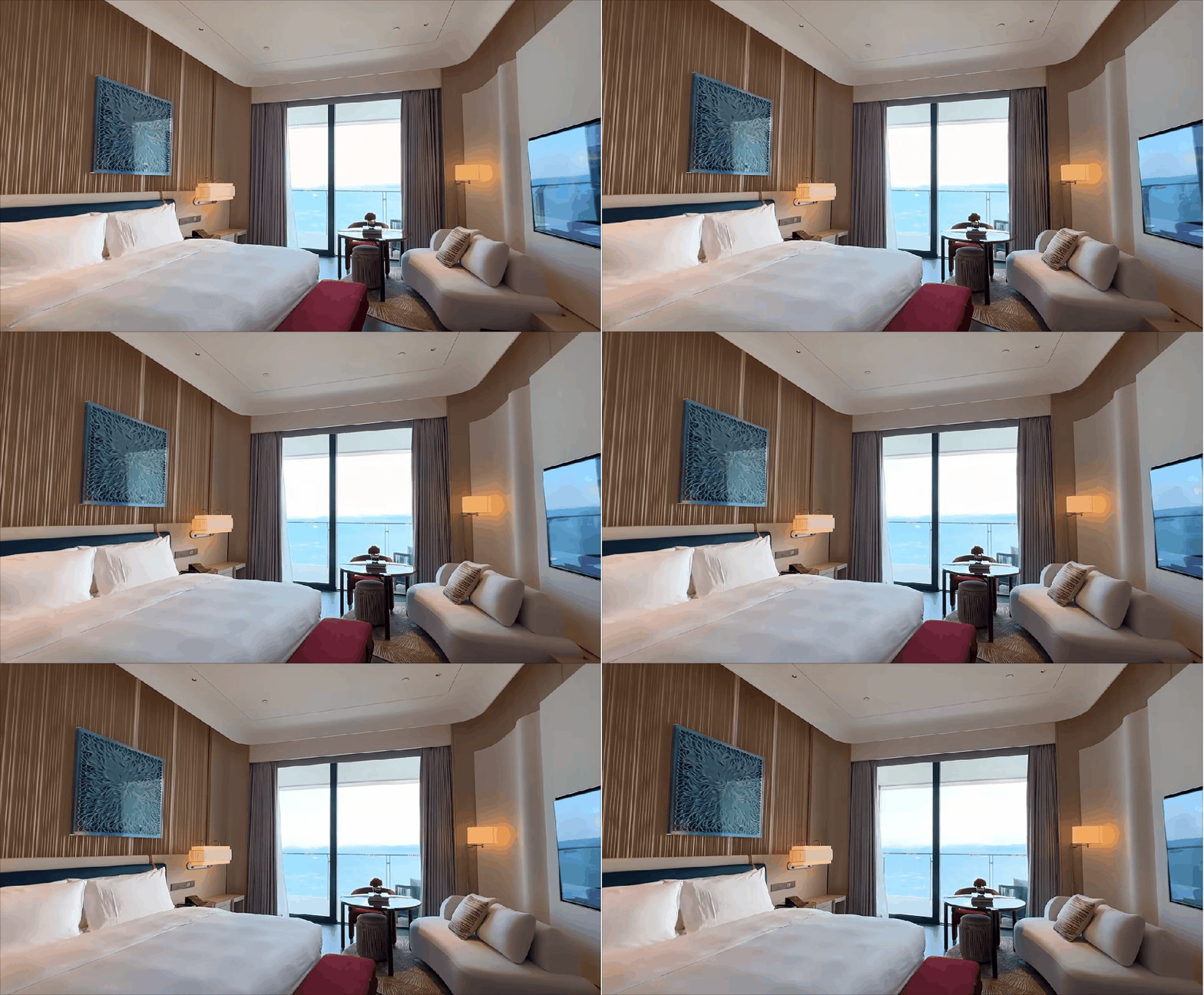
Bay windows, with their unique angles and timeless beauty, are the focal points of any room, enhancing natural light and ambiance. Selecting the right blinds is crucial to transforming these spaces, ensuring a seamless blend of light control, privacy, and style. Let’s discover how to perfectly harmonize blinds with your bay windows, enhancing their charm and your room’s overall feel with minimal light leakage and maximum aesthetic appeal.
What Is Bay Windows?
Bay windows, originating from the Gothic era, became popular in English homes during the late Victorian period due to regulatory changes that allowed windows to extend beyond the house’s wall. Typically comprising three interconnected panels—a central window flanked by two set at an angle—they create an interior “bay” that enhances the room’s size and natural light. This design, a blend of practicality and elegance, has been cherished since the 1800s for adding character, spaciousness, and expansive views to homes, making bay windows a timeless architectural feature.

Benefits of Bay Windows
Bay windows offer several advantages that make them a sought-after feature in homes. One of the most significant benefits is their ability to enhance the aesthetic value of a property. They add an element of grandeur and elegance, increasing curb appeal and potentially the home’s market value.
Additionally, bay windows create extra space within a room, which can be utilized in various ways, such as a cozy reading nook, a dining area, or simply extra seating. This added space not only makes a room feel larger and more open but also provides opportunities for unique interior design and decoration.
Another major advantage of bay windows is the improvement of natural light in a room. The extended surface area of the window allows for more light to enter from different angles, brightening the room throughout the day and offering panoramic views of the outdoors. This influx of natural light can enhance the mood and atmosphere of the space, as well as reduce the need for artificial lighting during the day.
Types of Bay Windows
Bay windows come in various styles and designs, each adding a unique charm and architectural interest to homes. Here’s an overview of the types of bay windows commonly found in residential architecture:
Canted Bay Windows
Canted bay windows are the classic version most people envision. They typically have a flat front with two angled or slanted sides. This type is most commonly found in Victorian architecture and is popular for its traditional aesthetic. The structure usually consists of three windows, where the central window is parallel to the home’s wall, creating a trapezoidal appearance from the outside.
Box Bay Windows
Box bay windows, as the name suggests, form a more rectangular or square shape. They extend outward from the home’s exterior, providing additional interior space. These bay windows are characterized by a flat front and sides that are perpendicular to the wall, creating a boxy appearance. They are often used in modern or contemporary homes and are ideal for creating a cozy nook or extra seating area.
Circle Bay Windows
Circle bay windows, also known as full-bay windows, create a semi-circular area in a room. They are composed of multiple windows that form a complete arc, offering expansive views and maximum natural light. This type of bay window is less common but makes a dramatic architectural statement when used.
Bow Bay Windows
Bow bay windows are similar to traditional canted bay windows but consist of more than three windows. These windows form a gentle outward curve, creating a rounded appearance that resembles the arc of a bow. Bow windows allow for more light to enter the room due to their curved structure and provide a panoramic view of the outdoors. They suit various architectural styles, from classic to contemporary.
Circle Bay Windows
Circle bay windows, also known as full-bay windows, create a semi-circular area in a room. They are composed of multiple windows that form a complete arc, offering expansive views and maximum natural light. This type of bay window is less common but makes a dramatic architectural statement when used.
Challenges in Dressing Bay Windows
Despite their benefits, bay windows can pose significant challenges when it comes to dressing them with blinds or other window treatments. The unique shape and size of bay windows mean that off-the-shelf solutions often do not fit well or look appropriate. Window treatments need to be custom-fitted to ensure they complement the window’s design and do not hinder its functionality or aesthetic appeal.
The angles of the side windows, coupled with the depth of the bay, require careful consideration of the blinds’ fit, function, and form. It’s crucial to select window treatments that can adapt to the window’s shape, allowing for smooth operation and effective light control without compromising on style. Additionally, the treatments must align with the room’s overall decor and the window’s architectural style to create a cohesive and visually appealing space.
Addressing these challenges requires a thoughtful approach to selecting and installing window treatments for bay windows. By considering the unique characteristics of the windows and the specific needs of the space, homeowners can enhance both the functionality and beauty of their bay windows.
Best Bay Windows Blinds Types
Selecting the ideal blinds for bay windows is crucial to enhancing both the room’s aesthetics and functionality. The unique structure of bay windows calls for specific types of blinds that not only complement the design but also offer practical benefits.
Vertical Blinds
Vertical blinds are an excellent match for both angled and box-shaped bay windows, seamlessly blending functionality with modern style. Designed for easy light control, these blinds can be drawn aside or parted from the center, allowing for adjustable light and privacy levels. Their vertical slats, which hang from a top track, can be rotated using a control rod, offering precise control over sunlight and view. This makes them particularly suitable for the straight angles of square bay windows, adding a touch of elegance and sophistication to the room.
Furthermore, for those seeking enhanced room comfort, blackout or energy-efficient vertical blinds are available, leveraging their practicality to improve insulation and darken the room when needed. Although vertical blinds are a versatile choice for larger windows, they may require custom solutions to fit the unique dimensions and angles of bay windows perfectly, ensuring a harmonious and stylish integration into your living space.

Roman Blinds
Bay windows offer several advantages that make them a sought-after feature in homes. One of the most significant benefits is their ability to enhance the aesthetic value of a property. They add an element of grandeur and elegance, increasing curb appeal and potentially the home’s market value.
Additionally, bay windows create extra space within a room, which can be utilized in various ways, such as a cozy reading nook, a dining area, or simply extra seating. This added space not only makes a room feel larger and more open but also provides opportunities for unique interior design and decoration.
Another major advantage of bay windows is the improvement of natural light in a room. The extended surface area of the window allows for more light to enter from different angles, brightening the room throughout the day and offering panoramic views of the outdoors. This influx of natural light can enhance the mood and atmosphere of the space, as well as reduce the need for artificial lighting during the day.

Plantation Shutters
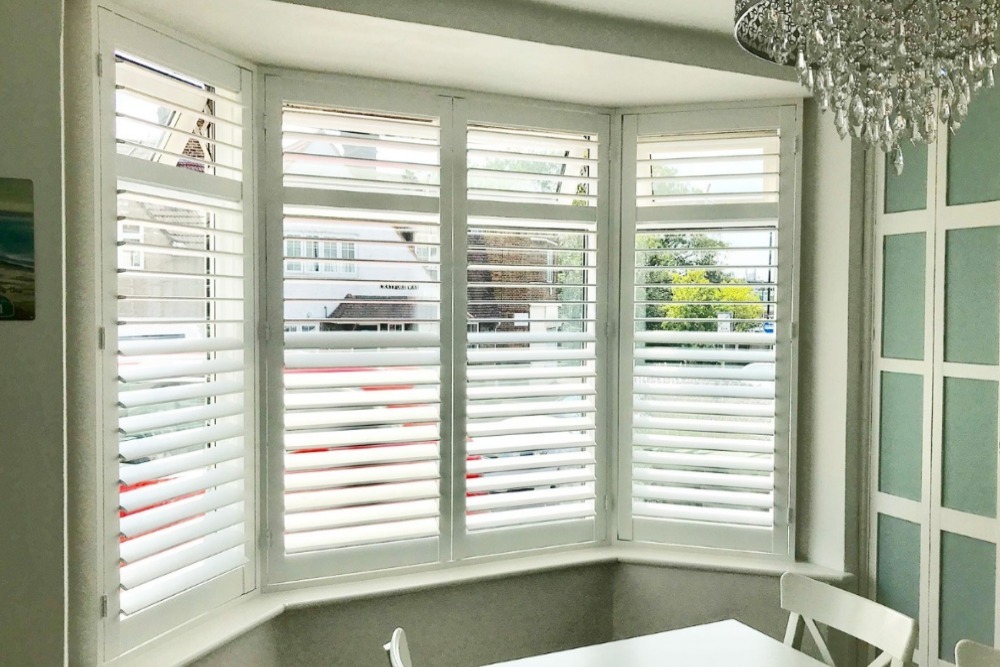
Plantation shutters, often used as interior window coverings for bay windows, are renowned for their elegance and wide, adjustable louvers, which provide effective light and airflow control. These shutters, typically mounted inside the window frame, are ideal for enhancing the aesthetic appeal of both the interior and exterior of your home, particularly when installed in bay windows. Their large louvers, generally larger than those found on traditional shutters, give them a sleek, modern appearance that is perfect for street-facing bay windows.
Available in a variety of styles, including café, tier-on-tier, or full height, plantation shutters offer a modern and chic alternative to traditional window dressings for bay windows. They not only lend a fashionable touch to your interiors but are also simple to maintain, requiring just a quick wipe to keep clean. This blend of functionality and style makes plantation shutters, especially when installed as shutter blinds for bay windows, an excellent choice for those seeking to enhance the modern vibe of their living spaces. They ensure privacy and controlled natural lighting, making them ideal for the unique curvature and design challenges presented by bay windows.
Roller Blinds
Roller blinds are a suitable and cost-effective choice for bay windows, offering a modern solution that fits various window shapes. Customizable for each window section, they provide a seamless look and eliminate light gaps, especially important in bay windows with unique angles or sizes. They are ideal for rooms requiring adjustable light control, with options from sheer to blackout fabrics to cater to different needs. Additionally, roller blinds are easy to operate, with manual or automated systems, and require minimal maintenance, usually needing just a simple wipe to stay clean. When installing, ensure accurate measurements for a perfect fit, whether inside the recess or overlapping with the window frame, to maintain functionality and enhance room aesthetics.

Pleated Blinds
Pleated blinds, also known as pleated shades, are a popular window treatment choice, known for their accordion-like folds that add texture and depth to any space. Available in a range of materials, colors, and patterns, they fit any decor style, making them a versatile option for bay windows. Pleated blinds are particularly suited for bay windows due to their ability to conform to awkward shapes and angles, ensuring a perfect fit that minimizes light leaks. Their lightweight nature is ideal for large, wide, or tall windows without the constraints of heavier blinds.
Additionally, pleated blinds can be manufactured without cords, enhancing child safety and eliminating the risks associated with corded window treatments. When selecting pleated blinds, consider the direction of light and required privacy levels to choose the best fabric and design for your bay windows.

Choose the Professional Manufacturers
Whether you are looking to purchase bay windows or bay window blinds, the right supplier can provide you with high-quality products and services. As you consider choosing an online manufacturer, take a look at the following suggestions to help you find a professional bay window/bay window blinds manufacturer:
Experience: It is important to know the experience of the supplier. Check out the company profile to find out when they were founded, the countries they serve, past projects and logistics and shipping processes. The transparency of a company’s information is often directly proportional to its authenticity and reliability.
Quality Assurance: Check if the supplier offers a quality guarantee or return policy. A responsible manufacturer will stand behind their products and provide customers with certain after-sales guarantees.
Cooperative Brand: The cooperative brand can reflect the supplier’s market position and product quality. You can check out the brands they work with through online platforms, web reviews, and forums. Be a careful consumer and conduct thorough research.
Customer Service: Excellent customer service is crucial to resolving any issues during the purchasing process. Before choosing a vendor, try contacting their customer service team to get a feel for their responsiveness and problem-solving abilities.
Logistics Services: Suppliers should provide smooth logistics services to ensure that your orders are delivered safely and on time. Check with suppliers for their logistics information, such as whether they provide online order tracking services, which can help you understand the status of your orders in real time.
Conclusion
In summary, choosing the best blinds for bay windows requires considering factors such as light control, privacy, style, and ease of use. By carefully evaluating your needs and exploring the various options available, you can find the perfect solution. If you still have questions, please feel free to contact us!
Frequently Asked Questions (FAQs)
The best types of blinds for bay windows include vertical blinds, Roman blinds, roller blinds, and plantation shutters, each offering different aesthetics and functionalities suitable for the unique shape of bay windows.
Measuring for bay window blinds can be complex due to the angles involved. It’s recommended to use a steel tape measure and record the width and drop of each section of the window. For precise measurements, consider consulting with a professional.
For a living room bay window, combine the elegance of curtains with the functionality of blinds for a balanced look. Roller blinds or wooden blinds offer privacy and light control while maintaining a sleek appearance. Layering these with flowing curtains adds depth and softness, enhancing the room’s overall ambiance.
Consider using wooden blinds for a warm, natural look in your bay window, which can add character and style. For a contemporary feel, opt for blackout blinds in a bold color. Mix and match different styles, like combining roller blinds with sheer curtains for both privacy and soft light.
For bow windows, the best blinds are those that can be custom-fit to each segment, such as vertical blinds, pleated shades, or mini blinds. These can be adjusted individually to maintain privacy and light control while preserving the panoramic view.