Noise problems often show up where people least expect them—right at the door.
Even in well-built homes and apartments, doors are usually the weakest point in a room’s sound insulation. That’s why adding carpets, wall panels, or thicker walls sometimes changes very little, while noise still leaks in or out through a closed door.
The problem is that the term sound proof door is widely misunderstood. Some people expect complete silence. Others assume that any heavier door will solve the issue. In reality, sound control at doors depends on a combination of structure, sealing, and realistic performance limits.
This guide breaks down what a sound proof door actually means, what it can and cannot do, and how to approach sound reduction without wasting money on ineffective solutions.

What Does “Sound Proof Door” Mean?
The phrase sound proof door suggests a door that blocks all sound—but in most residential and commercial settings, that level of performance is not realistic.
In practice, a sound proofing door usually means a sound-reducing door, not a sound-eliminating one. Its purpose is to significantly reduce airborne noise, such as voices, TV sound, or hallway noise, rather than completely stopping sound transmission.
Another source of misunderstanding is performance ratings. Terms like STC or OITC are often mentioned to suggest acoustic capability, but these numbers are frequently taken at face value without understanding their limitations. A higher rating does not automatically mean a room will feel quiet, especially when low-frequency noise or poor sealing is involved.
A more accurate way to think about a sound proof door is this:
it is one part of a sound control system, designed to reduce noise transmission to a predictable degree when paired with proper sealing, installation, and realistic expectations.
Understanding this distinction early prevents over-spending, unrealistic expectations, and the frustration of installing a “soundproof” door that still lets noise through.
What are STC and OITC Ratings?
STC and OITC ratings are often used to describe how “soundproof” a door is, but these numbers are frequently misunderstood.
STC measures how well a door reduces airborne sound, mainly in the speech range. It is useful for comparing door constructions, which is why solid-core doors typically rate higher than hollow-core ones. However, STC is tested under ideal laboratory conditions, with perfect sealing that rarely exists in real installations.
OITC places more emphasis on low-frequency noise, such as traffic or mechanical sounds, which are harder to block and often more noticeable in daily life. For doors exposed to outdoor noise, OITC can offer a more realistic reference—but it is still a lab-based rating.
Neither STC nor OITC accounts for sound leaking around a door. Gaps, poor sealing, and installation quality can easily outweigh small differences in ratings. As a result, these numbers describe potential performance, not the actual experience inside a room.
Used correctly, STC and OITC help compare door slabs. Used alone, they often create false expectations.
Why Is a Door Such a Major Weak Point for Sound?

In most rooms, sound does not escape evenly through every surface.
It looks for the easiest path—and doors almost always provide it.
Unlike walls, which are usually solid, continuous, and sealed on all sides, a door is designed to move. That single requirement introduces multiple weaknesses that sound can exploit.
Doors Are Thinner Than Walls by Design
Most interior walls contain layers of drywall, framing, insulation, and air cavities. Doors, even solid ones, are much thinner by comparison. A hollow-core door is especially problematic, but even a solid-core door rarely matches the mass or structure of a wall.
Less mass means less resistance to airborne sound, particularly speech and mid-range noise.
Gaps Matter More Than Materials
Sound does not need a large opening to escape.
Small gaps around a door—at the sides, top, or bottom—can leak more noise than the door panel itself.
This is why replacing a door without addressing sealing often produces disappointing results. The sound simply bypasses the door leaf and travels through the gaps instead.
In practical terms, sound prefers air paths over solid materials. If air can move, sound can follow.
The Door Frame Creates a Break in the Structure
A wall is continuous. A door opening is not.
Where the frame meets the wall, there are joints, tolerances, and often hidden voids. These junctions create flanking paths, allowing sound to travel around the door rather than through it. This effect is subtle but becomes noticeable in apartments, hotels, and offices where hallway noise is a common complaint.
Movement and Function Limit Sealing
Unlike fixed building elements, doors must open and close smoothly. That requirement limits how tightly they can be sealed. Excessive friction, misalignment, or compression would make daily use impractical.
As a result, doors always represent a compromise between usability and sound control—one that walls do not have to make
This explains why door upgrades alone often fail to deliver the expected results, and why sound control at doors is always a matter of managing multiple weak points together.
What Makes a Door More Soundproof Than Others?
Not all doors perform the same when it comes to sound reduction.
The difference usually has less to do with appearance and more to do with what’s inside the door—and how it’s built.

Hollow-Core Doors: Why They Perform So Poorly
Hollow-core doors are common in residential interiors because they are lightweight, affordable, and easy to install. Acoustically, however, they are one of the weakest options.
Inside, these doors are mostly empty, often using a honeycomb or cardboard structure. This lack of mass allows sound to pass through with very little resistance. Voices, TVs, and even moderate background noise can travel through a hollow-core door almost as if it were not there.
No amount of surface treatment can fully compensate for this internal weakness.
Solid-Core Doors: A Clear Step Up, With Limits
Solid-core doors replace empty cavities with denser materials such as engineered wood, particle core, or composite fills. This added mass significantly improves resistance to airborne sound, especially speech and mid-range noise.
In many homes and offices, switching from a hollow-core to a solid-core door produces the most noticeable improvement of any single upgrade. That said, a solid-core door is still thinner and lighter than a wall, which means it has a performance ceiling.
It reduces sound—it does not eliminate it.
Door Weight and Density: Why Heavier Helps, but Only to a Point
In sound control, mass matters. Heavier and denser doors vibrate less when sound hits them, which reduces transmission. This is why heavier doors generally perform better than lightweight ones.
However, doubling door weight does not double sound reduction. Gains become smaller as mass increases, and structural factors like gaps and framing quickly become the dominant problem.
Construction Quality Matters More Than Finish
Decorative finishes, veneers, and surface coatings have little impact on sound reduction. What matters is how tightly the core is bonded, how rigid the door slab is, and how well it interfaces with the frame.
A well-built solid-core door with modest finishes will outperform a visually premium door with poor internal construction.
In other words, the door itself sets the baseline for sound reduction—but it does not determine the final result on its own.
This is why two doors with similar weight can perform very differently once installed.
How Important Are Door Seals in a Sound Proof Door System?
When it comes to sound control at doors, sealing often matters more than the door itself.
A solid, heavy door can still perform poorly if sound is allowed to pass freely around it. In contrast, a modest door with proper sealing can sometimes deliver noticeably better results. This is because sound does not need to travel through the door—it will always prefer the path of least resistance, which is usually air gaps.

Why Small Gaps Cause Big Sound Leaks
Sound travels efficiently through air. Even narrow gaps around a closed door—along the sides, at the top, or under the door—can leak a surprising amount of noise. These gaps are often invisible at first glance, but acoustically, they behave like open windows.
This explains why many door upgrades fail. The door panel is improved, but the gaps remain unchanged, allowing sound to bypass the door entirely.
The Main Sealing Zones Around a Door
Effective sound control depends on addressing all critical sealing points as a system:
Perimeter seals along the sides and head of the door help block airborne leakage at the frame.
Door bottoms or thresholds address the largest and most common gap, especially on interior doors without raised sills.
Frame-to-wall interfaces can hide voids that allow sound to flank around the door rather than passing through it.
Ignoring any one of these areas reduces the effectiveness of the entire setup.
Door Seals Are About Compression, Not Contact
Good sealing is not achieved by simply “touching” the door. Seals must compress slightly when the door is closed. Too little compression leaves gaps; too much compression makes the door difficult to operate and leads to premature wear.
This balance is why soundproofing at doors is often inconsistent. Doors are designed to move freely, and sealing must work within that constraint.
Why Door Seals Are Often Underrated
Seals are rarely visible, and they don’t feel substantial compared to a thick door slab. As a result, they are often treated as accessories rather than core components.
In reality, sealing determines whether the door’s acoustic potential is reached at all. Without it, even high-performing doors rarely deliver their rated performance in real-world use.
Sealing Alone Has Limits
Proper sealing can dramatically reduce airborne noise, but it cannot compensate for a door that lacks mass or rigidity. Seals stop sound from escaping around the door; they do not stop sound from passing through it.
This is why sealing and door construction must be considered together, not as separate upgrades.
Should You Upgrade an Existing Door or Replace It?
Once you understand how sound travels through doors—and what ratings can and can’t tell you—the next question becomes practical: should you improve what you already have, or is it time to replace the door entirely?
There is no universal answer. The right choice depends on the door’s structure, the type of noise you’re dealing with, and how much improvement you realistically need.

When Upgrading an Existing Door Makes Sense
Upgrading is often the smarter option when the door itself is structurally sound, but performance is limited by gaps and poor sealing.
This is typically the case with:
Solid-core doors that transmit sound mainly through air gaps
Doors where noise is moderate, such as voices or TV sound
Situations where budget or disruption needs to be kept minimal
In these cases, improving perimeter seals, addressing the door bottom, and correcting alignment can deliver a noticeable improvement without replacing the door slab. The gains come from stopping sound from bypassing the door rather than trying to block it with more mass.
When Replacing the Door Is the Better Choice
Replacement becomes the more effective route when the door itself is the primary weakness.
This usually applies to:
Hollow-core doors with very low mass
Doors that visibly flex or vibrate when sound hits them
Spaces requiring higher privacy, such as bedrooms, offices, or meeting rooms
In these situations, no amount of sealing can compensate for a door that simply lacks density. A solid-core replacement raises the baseline performance and gives sealing measures something meaningful to work with.
Understanding the Performance Ceiling
Every upgrade has a limit. Seals can dramatically reduce leakage, but they cannot stop sound passing through a lightweight door. Likewise, replacing a door without sealing leaves much of its potential unused.
This is why many disappointing outcomes happen in the middle—when only one part of the system is addressed.
A simple way to think about it:
Upgrades improve efficiency
Replacements improve capacity
Knowing which one you need prevents unnecessary expense.
A Practical Decision Framework
Before choosing, ask three questions:
Is sound leaking mainly around the door or through it?
Is the existing door solid enough to justify further investment?
How much improvement is actually required for the space to feel quieter?
If sealing alone cannot meet your expectations, replacement is likely justified. If the door is already solid and noise is moderate, upgrading may be enough.
Avoiding the Most Common Mistake
The most common mistake is replacing a door too early—or sealing too late. Either approach leads to wasted effort and uneven results.
Effective sound control starts with choosing the right intervention at the right stage, not jumping straight to the most expensive option.
What Budget Levels Make Sense for a Sound Proof Door?
Soundproofing a door doesn’t require a single fixed budget. What matters is matching the investment to the level of noise you actually need to reduce.
At the lower end, most of the improvement comes from sealing. Perimeter seals and door bottoms are relatively inexpensive and often deliver the biggest return when noise leakage is moderate. This level is usually enough for everyday privacy, such as reducing voices between rooms.
A mid-range budget typically goes toward replacing hollow-core doors with solid-core doors, combined with proper sealing. This is where improvements become more consistent and noticeable, especially in bedrooms, offices, and shared living spaces.
At the higher end, specialized acoustic doors and heavier systems are used. These are appropriate when privacy requirements are strict or when noise levels are persistent and intrusive. For most residential situations, this level is unnecessary unless expectations are very high.
The key is not spending more than the situation demands. If sealing can solve the problem, replacing the door adds little value. If the door itself is the limitation, sealing alone won’t justify its cost.
How Much Noise Reduction Can You Realistically Expect?

One of the most common frustrations with sound proofing doors is not performance—it’s expectation.
In real spaces, sound reduction is gradual, not absolute. Small improvements can feel meaningful when they target the right problem, while larger upgrades may feel underwhelming if expectations are unrealistic.
For moderate noise such as voices or TV sound, sealing and door upgrades usually bring a noticeable improvement. The space feels quieter, and privacy improves, but sound is rarely eliminated. Background noise becomes less distracting rather than disappearing completely.
Low-frequency noise behaves differently. Traffic, bass, and mechanical sounds travel through structures and are harder to block at doors alone. In these cases, even a well-sealed solid-core door may only deliver partial relief.
What matters most is alignment:
Light to moderate noise responds well to door-level solutions.
Persistent or low-frequency noise often requires broader treatment beyond the door.
When expectations match the limits of the system, results feel successful. When they don’t, even technically correct solutions can feel disappointing.
Which Door Types Are the Hardest to Soundproof?
Not all doors can be soundproofed effectively. Some designs introduce structural limitations that no amount of sealing or added mass can fully overcome.
Pocket Doors
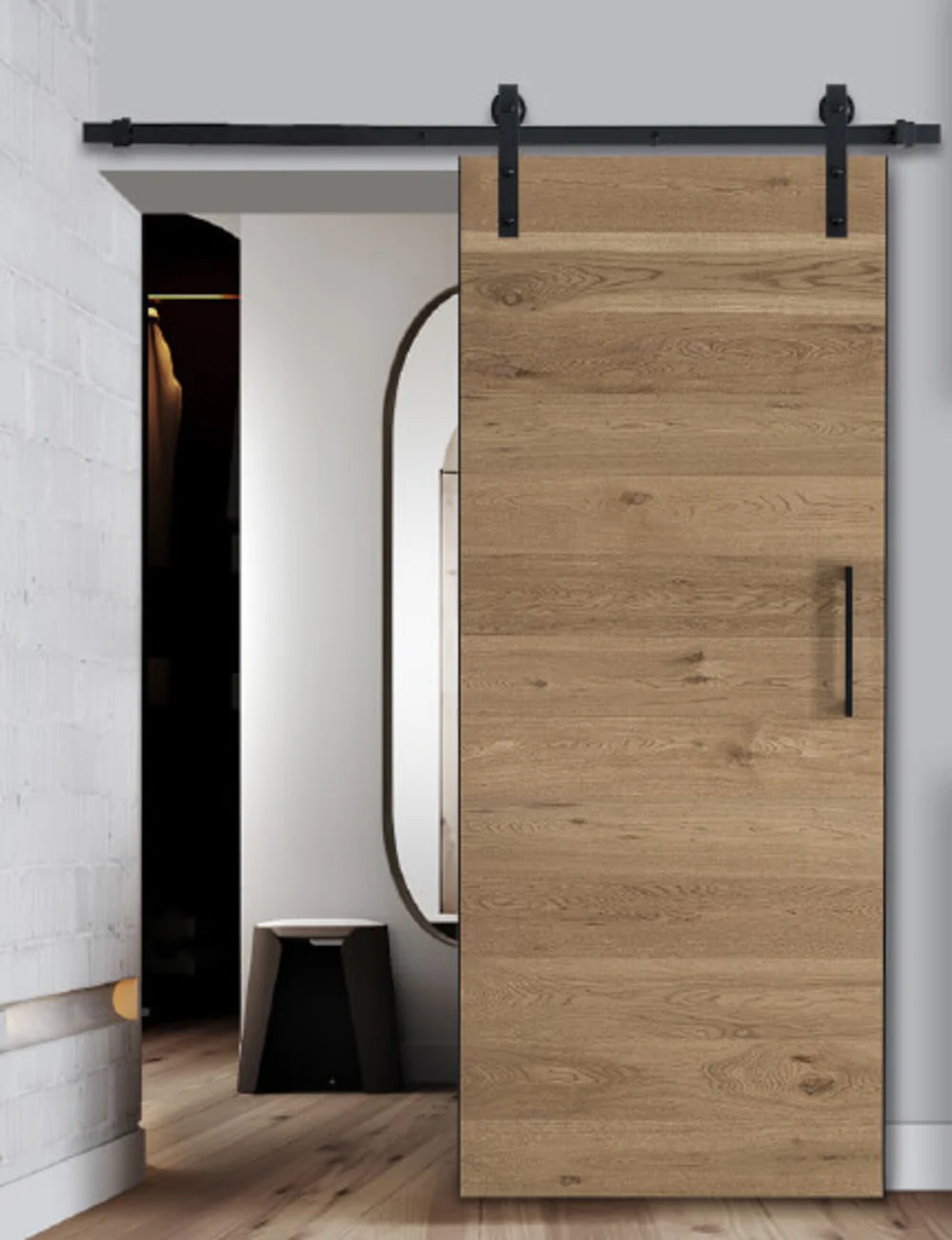
Pocket doors slide into the wall cavity, which makes proper sealing almost impossible. Gaps are built into the design, and the surrounding wall structure is often interrupted. As a result, sound easily leaks around the door rather than through it.
Pocket doors are excellent for saving space, but they are among the weakest options for sound control.

Sliding Doors
Sliding doors face a similar challenge. Because they must move laterally, they rely on loose tolerances rather than compression seals. Even with upgraded hardware, maintaining consistent contact along the entire perimeter is difficult.
This makes sliding doors poor candidates for situations where sound privacy is a priority.

Glass-Heavy Doors
Large glass panels reduce mass and allow more vibration, especially in mid- and low-frequency ranges. While laminated or acoustic glass can help, performance is still limited compared to solid constructions.
Glass doors work well visually, but acoustically they require compromises.
Lightweight Door Systems
Any door designed primarily for ease of movement—thin panels, lightweight frames, minimal hardware—will struggle to deliver meaningful sound reduction. These systems prioritize convenience over isolation.
Conclusion
A sound proof door is not a single product choice—it’s a system decision. Door construction, sealing quality, installation accuracy, and realistic expectations all work together to determine the final result. When any one of these elements is overlooked, even well-intentioned upgrades can fall short.
The most effective approach is understanding what problem you’re trying to solve, choosing the right level of intervention, and applying solutions in the correct order. Done properly, sound reduction feels natural and consistent, not forced or over-engineered.
If you’re planning a residential, hospitality, or commercial project and need practical guidance on door systems, materials, or overall sound control strategies, PA Window can help. With integrated capabilities across doors, cabinetry, and whole-house customization, PA Window supports projects from early planning to execution—helping you achieve better performance without unnecessary complexity.
FAQs About Sound Proof Door
To install a sound proof door correctly, focus on alignment, sealing, and consistency rather than complex techniques. The door must sit square in the frame so seals can compress evenly. All gaps around the frame and under the door should be sealed, as sound leaks through air paths, not the door panel itself.
A properly installed sound proof door closes smoothly, seals continuously on all sides, and delivers reliable sound reduction without forcing the door shut.
To sound proof a door effectively, focus on sealing first, then door construction.
Seal all gaps around the door frame and under the door, as air gaps are the biggest source of sound leakage. If the door itself is lightweight or hollow-core, upgrading to a solid-core door will significantly improve sound reduction.
For best results, combine proper sealing, a heavier door slab, and correct installation. Soundproofing a door works as a system, not a single upgrade.
The most effective solution is replacing it with a solid-core door. Sealing alone helps, but hollow-core doors transmit sound too easily to achieve good results.
Weatherstripping helps reduce sound leakage by sealing air gaps, but it won’t block sound passing through a lightweight door. It’s effective as part of a system, not a standalone solution.
Start with sealing. Add door seals around the frame and close the gap under the door. These low-cost fixes often reduce more noise than changing the door itself.