Interior doors do more than separate one room from another. The right door style can make a space feel brighter, quieter, more private, or more open, while also adding to the overall look of your home. From classic panel doors to modern flush doors, space-saving pocket doors, and elegant French doors, there are many styles to choose from. In this guide, we’ll look at 15 different types of interior door styles and where each one works best.
1
Panel Doors
Panel doors are one of the most classic and widely used interior door styles. You’ll see them in bedrooms, bathrooms, hallways, closets, and traditional homes because they work with almost any interior design. Instead of having a completely flat surface, panel doors feature raised or recessed sections that add depth and detail.
The most common options are 2-panel, 4-panel, and 6-panel doors. A 2-panel door often feels cleaner and more modern, while a 6-panel door has a more traditional look. If you want something timeless and easy to match with existing trim, wall colors, and hardware, panel doors are a safe and versatile choice.

2
Shaker Doors
Shaker doors are simple, clean, and highly versatile. They usually feature flat recessed panels with square edges, giving them a crisp and understated look. Because they are not too ornate, they can work well in modern farmhouse, transitional, Craftsman, coastal, and even minimalist interiors.
One reason Shaker doors are so popular is that they feel both classic and current. A single-panel or two-panel Shaker door can make a room feel more modern, while a multi-panel version can add a little more character without looking too busy. They are a great option if you want interior doors that feel stylish but not overly decorative.

3
Flush Doors
Flush doors have a smooth, flat surface with very little ornamentation. Their clean appearance makes them a strong choice for modern, minimalist, contemporary, and mid-century interiors. They are especially useful when you want the door to blend quietly into the room instead of becoming a focal point.
Another advantage of flush doors is that they are often more affordable than detailed panel doors, depending on the material and core type. They are easy to paint, easy to pair with simple hardware, and work well in apartments or modern homes. The only downside is that they can look a bit plain if the surrounding space lacks texture, color, or architectural detail.

4
French Doors
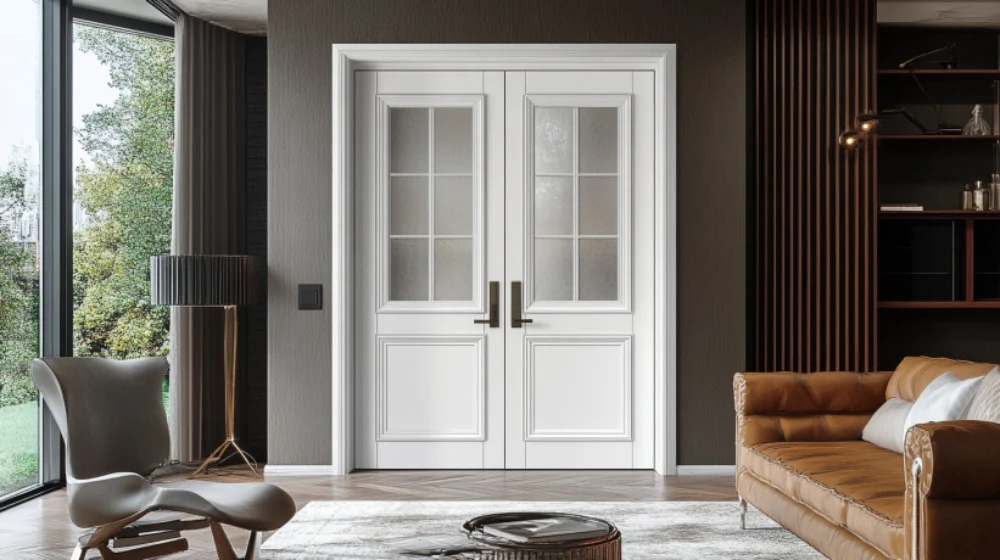
French doors are known for their glass panels and elegant appearance. They are often used between living rooms, dining rooms, home offices, sunrooms, and primary bedrooms because they allow light to pass through while still creating a sense of separation.
They are a great choice when you want a room to feel open, bright, and connected to the rest of the home. For example, French doors can make a home office feel less closed off while still helping define the space. Clear glass gives the most open feeling, while frosted or textured glass adds more privacy. Because French doors are visually prominent, they often work best in areas where the door can act as part of the room’s design.
5
Glass Interior Doors
Glass interior doors are ideal for spaces where you want natural light to move from one room to another. They can make hallways, offices, dining rooms, and darker interior rooms feel brighter and more open. Unlike solid doors, glass doors create separation without making the home feel closed in.
There are several glass options to consider. Clear glass feels open and airy, frosted glass adds privacy, and reeded or fluted glass brings texture and a more decorative look. Glass interior doors can feel modern, classic, or even vintage depending on the frame style and hardware. They are especially useful when a space needs light but does not need full visual privacy.

6
Frosted Glass Doors
Frosted glass doors are a practical middle ground between solid doors and clear glass doors. They allow light to pass through while obscuring the view, making them a popular choice for bathrooms, home offices, walk-in closets, laundry rooms, and dressing areas.
This style works especially well when you want a space to feel brighter without sacrificing too much privacy. For example, a frosted glass door can help a windowless bathroom or office feel less dark. It also adds a softer, more contemporary look than a standard solid door. However, frosted glass still does not provide the same level of sound control or privacy as a solid core door, so it is best used where light matters as much as separation.

7
Pocket Doors
Pocket doors slide into the wall instead of swinging open. This makes them one of the best interior door styles for small rooms and tight spaces. They are commonly used in small bathrooms, laundry rooms, closets, pantries, powder rooms, and narrow hallways where a swinging door would take up too much floor space.
The biggest benefit of a pocket door is space saving. It keeps the doorway functional without blocking furniture, cabinets, or walking paths. However, pocket doors usually require more planning than standard hinged doors because the wall needs enough internal space to hold the door. Plumbing, electrical wiring, and wall framing can also affect installation. They are easiest to add during new construction or major remodeling.

8
Barn Doors
Barn doors slide along a visible track mounted above the doorway. They are often associated with farmhouse and rustic interiors, but they can also work in industrial, modern, and transitional spaces depending on the door material and hardware.
A barn door can become a strong design feature, especially when made from wood, painted in a bold color, or paired with black metal hardware. It is a good choice for bedrooms, bathrooms, closets, pantries, laundry rooms, and home offices where you want the door to add character. However, barn doors usually do not seal as tightly as standard hinged doors, so they are not the best option when sound control or complete privacy is important.

9
Bifold Doors
Bifold doors are made of panels that fold together as they open. They are commonly used for closets, laundry areas, pantries, utility spaces, and other openings where a full swinging door would feel inconvenient. Since they fold instead of swinging all the way out, they can save space while still giving wide access to the opening.
Bifold doors are practical and often budget-friendly, but the quality of the track and hardware matters a lot. Poor-quality bifold doors can feel flimsy or come off track easily. For a more polished look, choose simple panel bifold doors, Shaker-style bifold doors, or louvered bifold doors depending on the room’s needs.

10
Sliding Doors
Sliding doors move horizontally along a track and are often used for closets, pantries, room dividers, and larger openings. Unlike pocket doors, they do not disappear into the wall. Instead, they slide in front of or behind another panel.
Bypass doors are one of the most common types of sliding interior doors. They are often used for closets because one panel slides behind the other, allowing access without requiring floor space for a door swing. Sliding doors are especially helpful in bedrooms, hallways, and compact rooms where every inch matters. They can look simple and functional, or they can become more decorative with glass, wood, mirrored panels, or modern hardware.

11
Louvered Doors
Louvered doors have horizontal slats that allow air to flow through. This makes them a smart choice for closets, laundry rooms, utility rooms, mechanical rooms, and areas that need ventilation. They are also common in coastal, tropical, and casual interiors because the slatted design adds texture and a relaxed feel.
The main benefit of louvered doors is airflow. They help prevent enclosed spaces from feeling stuffy, especially where clothes, linens, appliances, or HVAC equipment are stored. The tradeoff is that they offer less privacy and very little sound control. They also require a bit more cleaning because dust can collect on the slats.

12
Dutch Doors
Dutch doors are split horizontally, allowing the top and bottom halves to open independently. This makes them both charming and functional. They are often used in kitchens, mudrooms, nurseries, children’s rooms, laundry rooms, and pet-friendly spaces.
One of the biggest advantages of a Dutch door is control. You can keep the bottom half closed while opening the top half for light, air, or conversation. This is useful if you want to keep children or pets in one area without completely closing off the room. Dutch doors also add a distinctive, custom feel that many standard interior doors do not have.

13
Double Doors
Double doors use two door panels that open from the center. They create a wider entry and often make a room feel more formal, open, and important. You’ll often see them used for primary bedrooms, dining rooms, home offices, living rooms, walk-in closets, and media rooms.
This style works well when you want to create a sense of arrival. Double doors can make a home office feel more professional, a bedroom feel more luxurious, or a dining room feel more elegant. They can be solid, paneled, glass, French-style, or even pocket-style depending on the space. Because they need a wider opening, they are best suited for rooms that already have enough wall space.

14
Hidden Doors / Jib Doors/Invisible Doors
Hidden doors, also called jib doors or Invisible doors, are designed to blend into the wall. They may have concealed hinges, minimal trim, flush surfaces, or wall paneling that continues across the door. The goal is to make the door feel almost invisible.
This style is popular in modern, minimalist, and high-end interiors because it creates a clean and seamless look. Hidden doors are often used for powder rooms, closets, storage rooms, pantries, private offices, and luxury suites. They can also be used creatively as bookshelf doors or paneled wall doors. The look is sleek, but the installation usually requires precise framing, hardware, and finishing.

15
Pivot Doors
Pivot doors rotate on a pivot hinge instead of traditional side hinges. This allows the door to open in a smooth, architectural way and makes it a striking choice for large openings or design-focused interiors.
Although pivot doors are more common as entry doors, they can also be used inside the home for modern offices, primary suites, wine rooms, large closets, or statement room dividers. They work best in spacious interiors where the door has room to move and where the design is meant to stand out. Because pivot doors require special hardware, careful alignment, and often a larger opening, they are usually more complex to install than standard interior doors.

Conclusion
Choosing the right interior door style can make every room feel more complete, functional, and visually balanced. Whether you prefer a classic panel door, a space-saving pocket door, or a modern hidden door, the best choice depends on your space, privacy needs, and overall design style.
Want to learn more about popular interior door styles? Contact us today!
FAQs About Interior Door Styles
Panel doors and Shaker doors are among the most popular interior door styles. They are simple, timeless, and easy to match with different home designs, from traditional to modern farmhouse.
Glass interior doors are a good choice when you want more natural light and a more open feeling. They are often used for home offices, dining rooms, sunrooms, and living areas. For more privacy, frosted or textured glass is usually better than clear glass.
White, black, gray, beige, and natural wood tones are common choices. White feels clean and bright, black adds contrast, and wood finishes bring warmth to a modern space.
Pivot doors, hidden doors, and custom glass doors are usually among the most expensive interior door styles. They often require special hardware, precise installation, and custom sizing. Solid wood doors and high-end French doors can also cost more, especially if they use premium materials, detailed panels, or decorative glass.
2-panel, 3-panel, Shaker, and 6-panel doors all work well for bedrooms, depending on whether you want a modern or traditional look.