Whether you are building a new room or planning to replace your existing windows, you should understand which options can bring you maximum profit without increasing unnecessary opening costs. If you are wondering how to change the window, this is not just a matter of personal preference. As the global climate changes, US and local governments have established relevant technical specifications, so you must proceed with accurate calculations. Before proceeding with the window change, you need to carefully review the popular questions within the family. For old houses, built before city renovation regulations, it does not meet current energy requirements. However, if you want to change a window, you need to consider energy issues. Because the city may require you to change your windows.
Nowadays, aluminum windows and vinyl windows are both trend choices in window design. So, aluminum windows or steel base windows: which one is right for you? You may choose one option. Therefore, this guide will compare aluminum and steel base windows so that you can more intelligently decide which one to choose.
What Are Vinyl Windows?
Vinyl windows, also known as PVC (polyvinyl chloride) windows, are made from a plastic called polyvinyl chloride (PVC). They have become very popular in residential settings in recent years due to their durability and low maintenance requirements. Vinyl windows first appeared in the 1960s and quickly became an alternative during times of wood shortage. The first vinyl windows were brightly colored and designed to mimic painted wood. Today, vinyl windows are so similar to wood in appearance that many people confuse them for real wood windows. They retain their original color for many years and are less prone to the cracking problems that were common with earlier products.

Vinyl windows are widely popular due to their diverse design options and superior performance. Each type has its own unique features and benefits that are suitable for different needs and architectural styles:
Standard Vinyl Windows
Standard vinyl windows are the most basic type made of pure vinyl material. This type of window is the most economical and is ideal for short-term replacements or projects with a limited budget. Although its thermal insulation and durability are not as good as composite windows, it still provides good weather resistance and low maintenance requirements.
Composite Vinyl Windows
Composite vinyl windows are made of vinyl combined with other materials such as fiberglass or wood. This combination of materials provides greater strength and durability while maintaining the low maintenance characteristics of vinyl. Composite vinyl windows are generally stronger than standard vinyl windows and are suitable for long-term use.
Engineered Vinyl Windows
Engineered vinyl windows are vinyl windows that have been specially treated to enhance their specific functions, such as improving thermal insulation, fading resistance, or increasing strength. Each manufacturer may have its own unique engineered vinyl window products, and this type of window usually has superior performance but is relatively expensive.
Here are some other common types of vinyl windows:
- Vinyl Sliding Windows
- Aluminum Awning Windows
- Aluminum Casement Windows
- Aluminum Tilt&Turn Windows
- Aluminum Single-Hung Windows
- Aluminum Double-Hung Windows
What Are the Pros and Cons of Vinyl Windows?
Vinyl windows are very popular in residential construction due to their excellent performance and variety of design options. However, like any material, they also have some advantages and disadvantages to consider.

The Advantages of Vinyl Windows
1. Affordability
Vinyl windows are less expensive than other window materials (such as wood, steel and aluminum), providing a cost-effective option, especially for families with limited budgets.
2. Low maintenance
Vinyl windows do not require frequent painting or sealing, and are very resistant to rot, pests and moisture. Simple cleaning is required to keep them looking new.
3. Good insulation performance
Vinyl windows have excellent insulation performance, which can effectively reduce heat conduction and help families save heating and cooling costs. They have better insulation than ordinary aluminum windows, so they perform well in improving energy efficiency.
4. Durability
Vinyl windows are durable and will not rot or swell due to moisture like wood. They can maintain good performance in various climate conditions and have a long service life.
5. Waterproof and moisture-proof
Vinyl windows can resist wet weather and have good waterproof performance. When it rains, the rain will bounce directly off. They also reduce the possibility of moisture condensation. The glass on the inside is not easy to get cold and there will be no moisture condensation.
The Disadvantages of Vinyl Windows
1. Limited color selection
Although vinyl windows are available in a variety of color options, dark vinyl windows may become soft or sag in high temperatures or direct sunlight. Therefore, most vinyl windows are white or light-colored, and the color selection is relatively limited.
2. Potential deformation
In extreme temperature conditions, vinyl windows may deform, affecting the function and appearance of the window, especially in very hot or cold areas.
3. Low structural strength
Although vinyl windows are durable, they are not as strong as aluminum windows and are not suitable for applications that require additional structural strength, especially large windows or places that need to withstand high wind pressure.
4. Aesthetics
Although vinyl windows can imitate the appearance of wood, for some users who pursue the texture of real wood, vinyl windows are still not as beautiful as real wood windows.
5. Poor repairability
Once damaged, vinyl windows may be difficult to repair. In some cases, it may be necessary to replace the entire window frame or sash.
What Are Aluminum Windows?
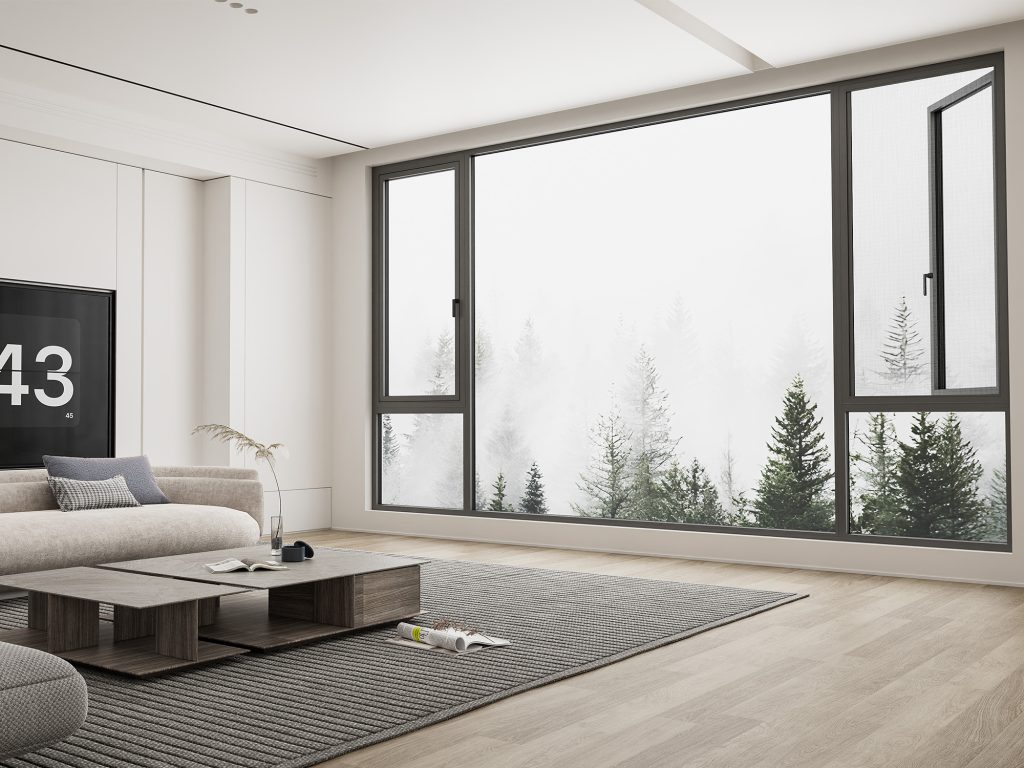
Aluminum windows are favored because they are lightweight, strong, and recyclable. Although aluminum has poor thermal insulation properties, it is stronger and a better choice for areas with extreme weather such as hurricanes and tornadoes. The energy efficiency of aluminum windows is improved by using thermal insulation strips between the window frame and the sash. Aluminum windows gradually became popular in the mid-20th century as an alternative to traditional wood windows. Due to their clean lines and modern appearance, they became the first choice for large windows and are particularly popular in commercial buildings and modern architectural designs. With advances in manufacturing and coating technology, the performance and appearance of aluminum windows have been significantly improved, making them ideal for residential use.
Types of Aluminum Windows
There are many types of aluminum windows, each with its own unique features and benefits that are suitable for different architectural styles and needs.
Standard Aluminum Windows
Standard aluminum windows are the most basic type of aluminum windows. They have all the advantages of aluminum, such as being lightweight, strong, and durable, but without the added insulation. Standard aluminum windows are relatively inexpensive and suitable for projects with limited budgets. However, due to their high thermal conductivity, this type of window may not be as good as other types in terms of thermal insulation performance.
Insulated Aluminum Windows
Thermal Broken Aluminum Windows add a thermal strip, usually plastic or composite, between the window frame and the sash to reduce heat conduction. This design greatly improves the energy efficiency of aluminum windows and is suitable for residential and commercial buildings that require high thermal insulation performance.
Aluminum Clad Windows
Aluminum Clad Windows combine the advantages of aluminum with other materials, usually wood. The outer layer of the window is made of aluminum, providing durability and low maintenance, while the inner layer is made of wood, providing natural beauty and excellent thermal insulation performance. This type of window is suitable for high-end residences that require high performance and aesthetics.
Here are some other common types of aluminum windows:
- Aluminum Sliding Windows
- Aluminum Awning Windows
- Aluminum Casement Windows
- Aluminum Tilt&Turn Windows
- Aluminum Single-Hung Windows
- Aluminum Double-Hung Windows
What Are the Pros and Cons of Aluminum Windows?
Aluminum windows are popular in modern buildings because of their unique advantages. You also need to consider the following disadvantages before purchasing.

The Advantages of Aluminum Windows
1. Long service life
Aluminum windows have a longer service life than many other types of windows, and can usually last 20 to 25 years. This durability makes them ideal for long-term investment.
2. Thin frame design
Aluminum windows tend to have thin frames, which means they can accommodate large pieces of glass. Many people choose aluminum windows to maximize the view and let more sunlight into their homes.
3. Safety
Aluminum is a relatively strong material, making aluminum windows difficult to dismantle or damage. Therefore, aluminum windows provide great security for residential and commercial buildings.
4. Environmental protection
Aluminum is often called a “green” metal because it is harmless to the environment. Recycling aluminum can save up to 95% of the energy used in its production. Therefore, aluminum windows are a great choice for environmentally friendly homeowners.
The Disadvantages of Aluminum Windows
1. Low energy efficiency
Aluminum has good thermal conductivity, which means that in the summer, aluminum may let outdoor heat enter your home, and in the winter, aluminum may also let indoor heat escape. Both of these conditions can increase your energy bills and reduce energy efficiency.
2. Corrosion
Although aluminum is a durable metal, it can corrode easily, especially in coastal areas where there is salt in the air and water. This corrosion can affect the lifespan and aesthetics of your windows.
3. Price
Aluminum windows are popular for their sleek, modern look. However, they also cost more to manufacture than other types of windows. This makes aluminum windows a poor choice for those who are budget-conscious.
Comparison of Aluminum and Vinyl Windows
When choosing window materials, aluminum windows and vinyl windows are two common choices. They each have their own advantages and disadvantages and are suitable for different needs and environments. Here is a comparison of aluminum windows and vinyl windows in key aspects:
Appearance and Aesthetics
Aluminum window frames are known for their sleek, modern look, which is perfect for modern and industrial architectural designs. Because of their thinner frames, they are able to accommodate larger glass areas, providing a wider view. Aluminum window frames are usually made of smooth or textured powder-coated enamel, which is available in a variety of color options. If the coating is worn, it can be repaired with enamel paint to keep the window frame smooth and beautiful. However, aluminum windows have relatively limited customization options, with fewer options for other aspects besides color. Although aluminum windows can be painted, this practice increases maintenance costs and paint does not adhere easily. Aluminum windows always retain their metallic appearance, which is suitable for some styles but not all.
In contrast, vinyl window frames offer more design options, satisfying a variety of styles from traditional to modern. Vinyl windows are available in smooth textures, matte finishes, and simulated wood grain designs, making them easier to integrate into different architectural styles. Vinyl window frames are usually thicker than aluminum window frames and can support a variety of finishes, even very realistic wood textures. Although vinyl window frames also have a variety of color options, dark vinyl windows may become soft or sag in high temperatures or direct sunlight, so most vinyl windows are white or light-colored. Vinyl windows offer a wider range of style options and are ideal for homeowners who want the look of wood windows but need the durability of modern materials. While vinyl window frames can be painted, this practice is not recommended because the paint does not adhere well and may void the manufacturer’s warranty.
Maintenance and Cleaning
Both vinyl and aluminum window frames require little maintenance, but they differ in their specific needs. Vinyl windows require minimal maintenance, usually requiring only periodic cleaning to remove dirt or algae. Vinyl window frames are the same color throughout their thickness, so they rarely need to be painted and will not change much even if exposed to the elements. Vinyl windows require little additional maintenance, making them a good choice for homeowners who want less frequent attention after installation.
Aluminum window frames require more maintenance, as they tend to accumulate condensation, which can lead to mold and rust. Especially in high humidity or coastal areas, aluminum windows are prone to corrosion if not cleaned and maintained regularly. After cleaning aluminum window frames with a special aluminum cleaner, the frames must be rinsed and dried, and moving parts must be lubricated regularly to prevent wear and tear on the mechanisms. Aluminum windows need to be repainted to hide scratches and dents, but this increases maintenance costs and is difficult to accurately match the original finish. Overall, while aluminum windows require less maintenance than traditional wood windows, they require more cleaning and maintenance than vinyl windows.
Window Cost
Generally speaking, vinyl window frames are 30 to 50 percent less expensive than aluminum windows. Vinyl windows are more affordable, costing significantly less than aluminum windows and are often the first choice for homeowners on a budget. But the exact cost depends on the manufacturer, quality and additional features. No matter which framing material you choose (aluminum or vinyl), installing new replacement windows can help protect your real estate investment and maximize your property’s value.
Installation Issues
Vinyl windows are easier to install due to their flexibility, the material easily contracts and expands, and they are simpler to use and suitable for DIY projects, making self-installation work relatively easy and suitable for less experienced users. In contrast, aluminum windows are more difficult to install due to their rigid and inflexible nature, and a slight deviation of one inch from the installation position will result in an incorrect installation. Whether it is vinyl windows or aluminum windows, if they are not installed properly, they will lose their waterproof and thermal insulation properties, affecting their functionality and beauty. For homeowners who do not fully understand the installation process and tools, it is recommended to hire a professional window installer.
Conclusion:Which is Better, Vinyl or Aluminum Windows?
Which is better, vinyl or aluminum? Aluminum windows are the clear leader in most categories.If you are looking for high-quality aluminum windows, contact the aluminum window experts at PA Window and Door today for more information on quotes, customization, materials, and more.
Frequently Asked Questions (FAQs)
Yes, vinyl windows are typically more affordable than aluminum windows. The cost of aluminum windows vs vinyl can be 30-50% higher, making vinyl a cost-effective option for many homeowners. For budget-conscious buyers, vinyl or aluminum windows cost comparisons often favor vinyl.
In extreme climates, vinyl windows tend to perform better as they have superior insulation properties. Aluminum windows, while strong, can transfer heat and cold more easily, which might not be ideal in very hot or very cold regions.
Yes, installation costs for aluminum windows can be higher due to the precision required and the complexity of the installation process. Vinyl windows are generally easier and quicker to install, which can reduce labor costs.
Aluminum windows are generally more secure due to the strength and rigidity of the metal frame, which is harder to break or tamper with compared to vinyl.
Both vinyl and aluminum windows can be designed to reduce noise, but vinyl windows generally offer better sound insulation due to their thicker, more flexible frames that can better absorb sound vibrations.