Opening a window sounds simple enough. But anyone who has lived in a city apartment, struggled through a hot summer night, or dealt with street noise knows it is not that simple.
In 2026, window ventilation design has become far more complex. Stricter energy standards require better airtightness, while growing awareness of indoor air quality is bringing natural ventilation back into focus. At the same time, higher urban density makes noise a major barrier to opening windows, and open-plan layouts make airflow harder to manage.
That is why good ventilation window design can no longer be reduced to simply opening a window. It now needs to consider window type, opening style, room layout, noise conditions, and building orientation together. In this guide, we will look at more than a dozen common and window types to help you make smarter ventilation decisions in 2026.
1
Casement Windows
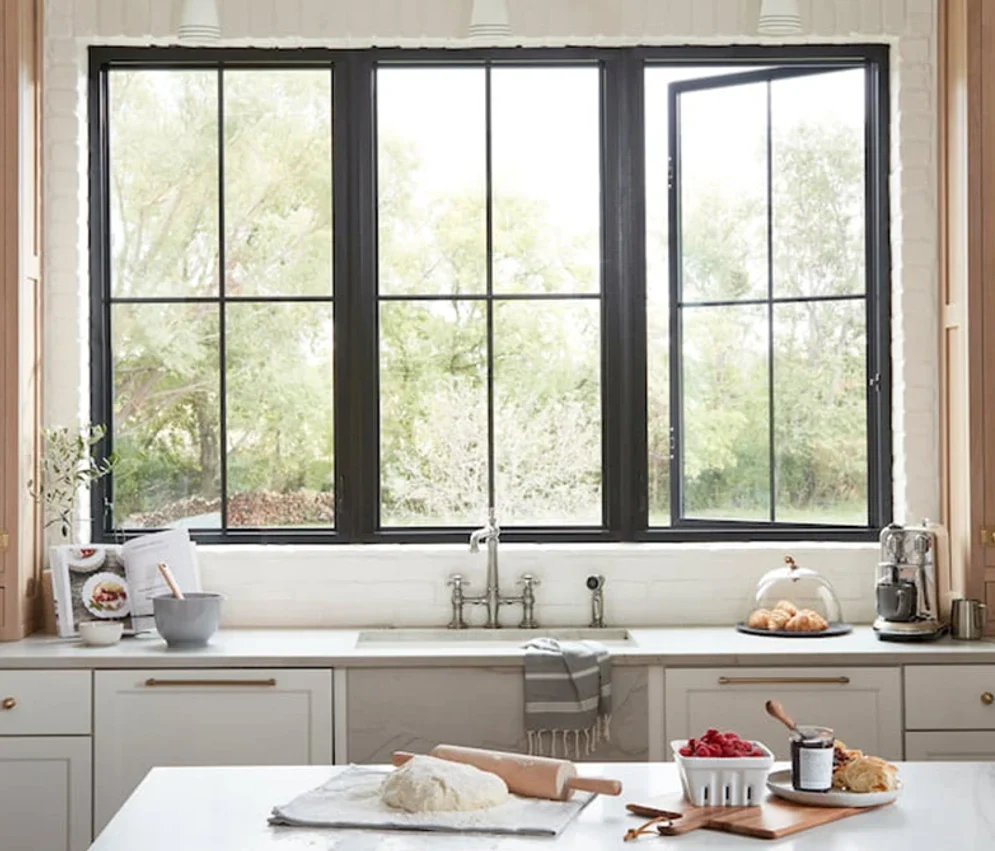
The hinges of a casement window are located on the side, and it opens inward or outward like a door. It can achieve the largest possible opening area, often reaching more than 90% of the frame area, which makes it a very common choice when aiming for a strong cross ventilation effect. When paired with a window on the opposite side, it can usually replace indoor air very quickly.
Outward-opening casement windows save more interior space and often look cleaner visually, but attention must be paid to outside obstructions such as AC units, railings, or neighboring walls, all of which can affect actual airflow. Inward-opening casement windows are easier to clean and better suited to some high-rise situations, but they take up indoor space, so details such as sofas, desks, and curtain boxes in front of the window need to be considered in advance.
2
Awning Windows
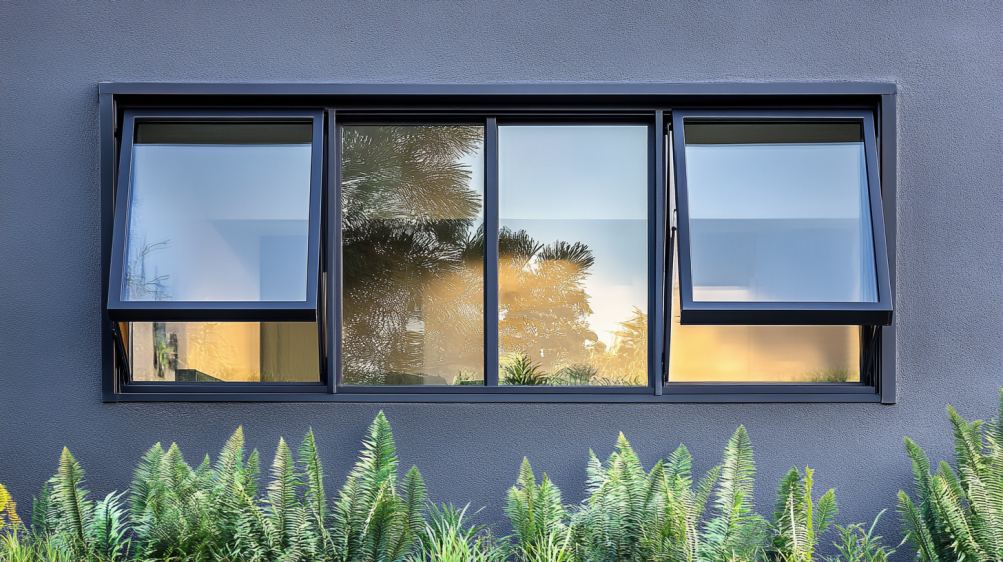
Awning windows guide airflow toward the ceiling or the floor through their tilted opening method. Their advantage is not necessarily that they create a strong breeze, but that the incoming air feels softer and is less likely to blow directly onto the body. This is especially practical in spaces such as bedrooms and studies where comfort matters.
Another clear advantage of this type of window ventilation design is that it can remain open relatively safely even on rainy days. In humid regions in particular, steady and gentle ventilation is often more practical than opening windows wide for a short time. Research also suggests that the actual ventilation capacity of hopper windows may sometimes be underestimated by traditional models, so in design, it is not always necessary to pursue larger window sizes. A better balance between comfort and energy efficiency can often be achieved through more reasonable control of opening type and opening ratio.
3
Sliding Windows
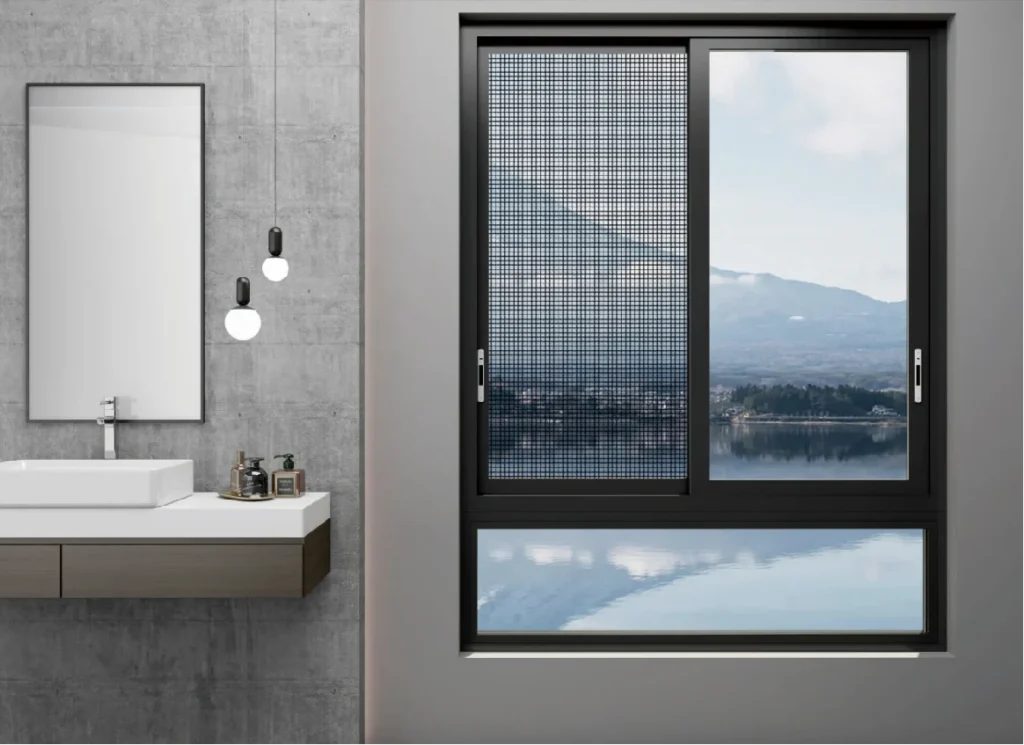
Sliding windows are among the most common residential window types. They are easy to use and relatively simple to maintain. Their limitation is equally clear: because usually only one side can open, the effective ventilation area is generally only about half of the frame area.
From the perspective of ventilation window design, sliding windows are better suited to basic ventilation rather than high-efficiency ventilation. If a project has higher requirements for airtightness and energy efficiency, then the sealing system of the sliding window deserves special attention. Over time, sliding windows are more likely to develop air leakage because of dust buildup in the track and aging seals. So in 2026, if sliding windows are still selected, it is best to prioritize products with upgraded sealing systems and to include long-term maintenance in the design expectation.
4
Tilt-and-Turn Windows
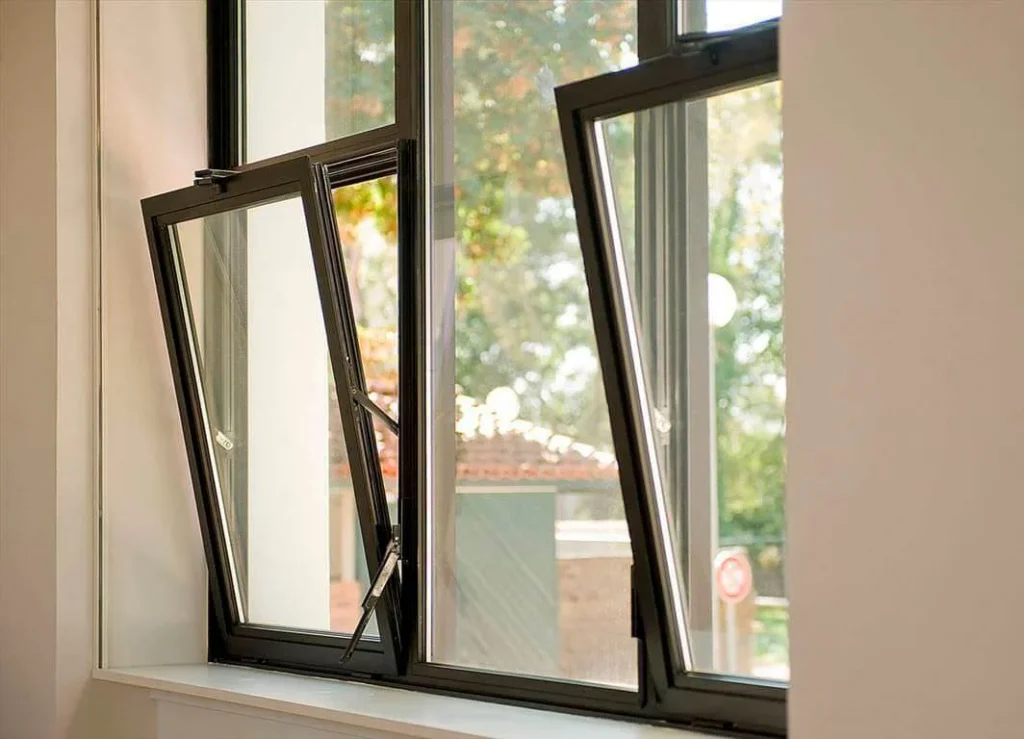
Tilt-and-turn windows are a very mature type of window system and are often understood as a more complete version of the tilt-rotating window. They combine two functions in one: they can tilt slightly for ventilation, or they can open fully for rapid air exchange. This dual-mode design has made them consistently popular in residential use.
In the tilt position, the sash leans inward from the top, creating softer airflow and offering higher security, which makes it suitable for continuous ventilation when no one is around. When fast ventilation is needed, the window can simply be switched to the fully open mode. For families with children, pets, or those who do not want their windows fully open for long periods, this type of window ventilation design is indeed a more balanced and convenient solution.
5
Cross-Ventilation Windows
When there are windows on both sides of a room, cross ventilation can work wonders by creating natural airflow. Strictly speaking, this is not just a single window type, but more of a layout strategy. In residential ventilation design, however, its importance is often greater than that of the individual window itself.
Many homes have plenty of windows, yet still feel stuffy after people move in. The problem is usually here: air can enter, but it cannot leave properly. Truly effective cross ventilation requires a complete airflow path, not just two windows that “can both be opened.” The position of doors, the thickness of partitions, the arrangement of furniture, and even a set of tall cabinets can interrupt this airflow path.
6
Corner Windows
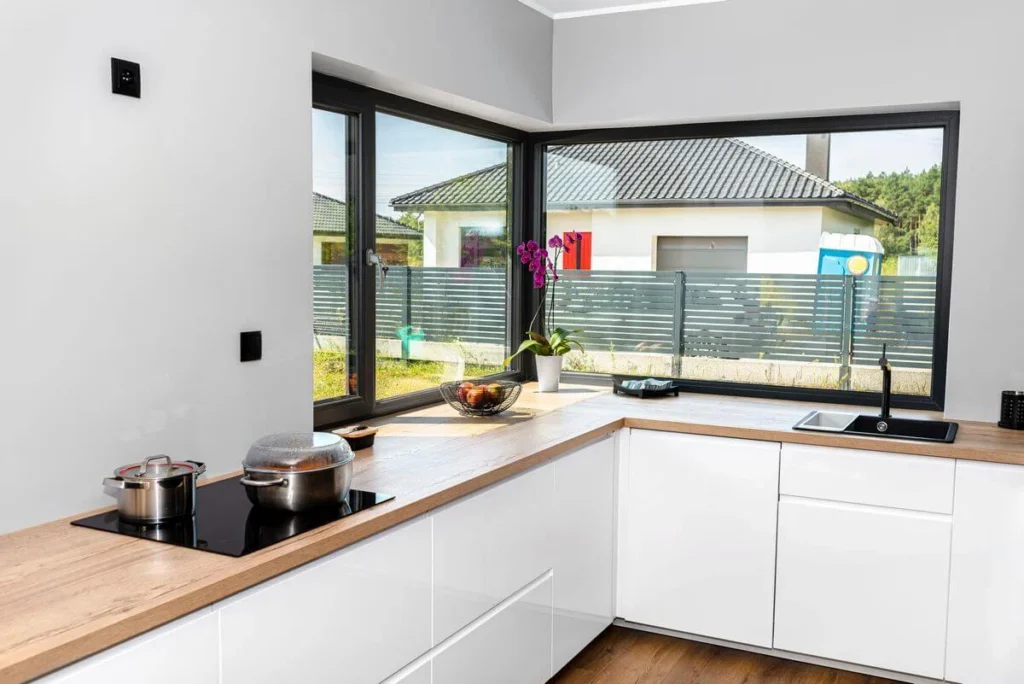
Corner windows are placed at the exterior corner of a building, with an opening on each adjoining wall. The advantage of this corner ventilation approach is that it can respond to pressure differences from two directions at once, so even when the outside wind is not particularly strong, it can still create effective airflow.
In dense urban environments, corner windows are especially valuable. Many homes cannot achieve the standard idea of front-to-back cross ventilation, but a corner position can use side winds, angled winds, and localized pressure differences more flexibly. In design, the opening direction and size combination of the two window panels should be carefully coordinated. When handled well, the ventilation performance is often better than that of a standard single-façade window.
7
Bay Windows
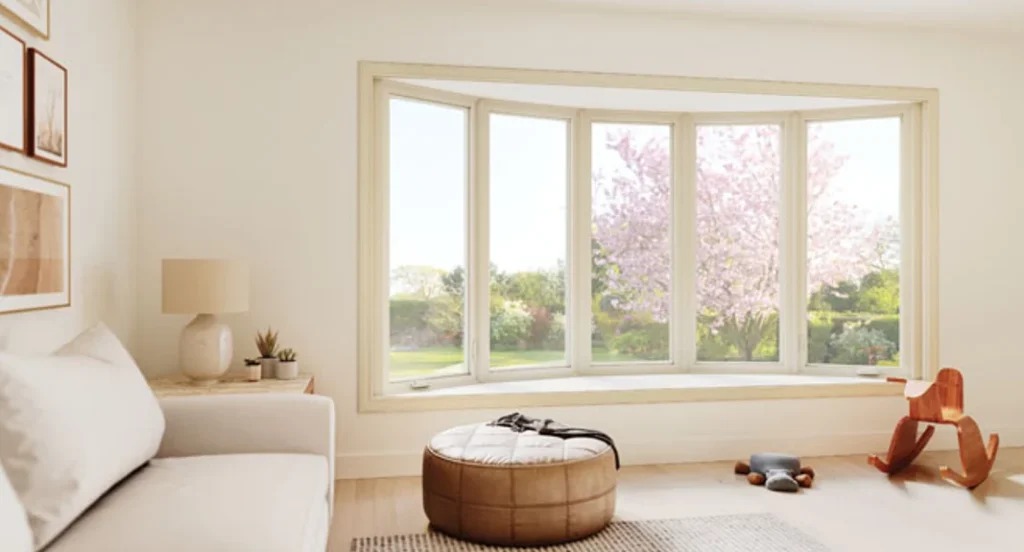
Bay windows not only add charming architectural character, but also improve ventilation. This type of window projects outward, creating a small alcove that allows air to enter from multiple angles. In some urban homes, it is not just a visual highlight, but can also become a turning point for airflow.
Compared with a flat window, a bay window can more easily draw outside air into different parts of the room, while also enhancing the sense of openness in the space. However, its ventilation performance largely depends on whether operable panels are included on the sides. If it is only a beautiful fixed-glass feature, much of the ventilation advantage is lost. So in window ventilation design, a bay window should not be judged by appearance alone. Its opening method matters just as much.

8
Bow Windows
A bow window is similar to a bay window, but instead of sharp angles, it has a softer curved form. What it brings is not a strong structural feeling, but a smoother visual and airflow transition. For homes that pursue a softer spatial expression, bow windows do stand out more in appearance.
From a ventilation perspective, a bow window does not automatically create stronger airflow on its own, but it can make the combination of multiple openings feel more natural, especially when paired with side-opening panels, corner openings, or small ventilation units. If designed properly, it can balance form and airflow organization, making it a strong option for large homes, villas, or projects with scenic views.
9
Skylights
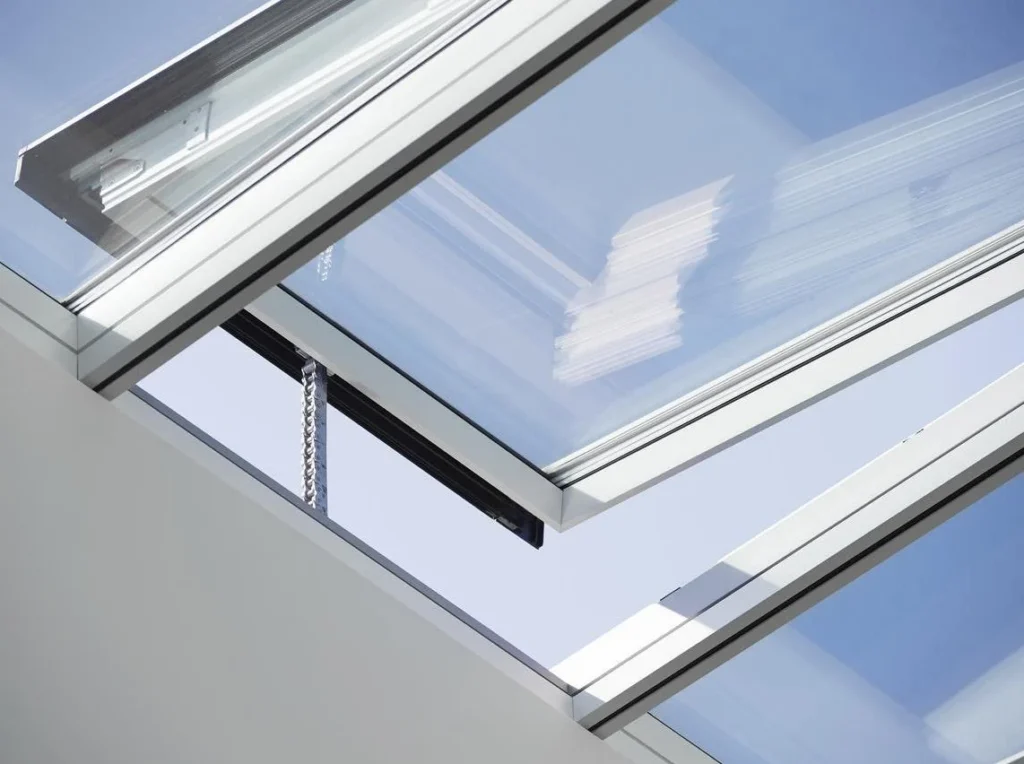
The most typical value of a skylight lies in its ability to use the stack effect, or chimney effect, to exhaust rising hot air and pollutants from the upper part of the space. For top-floor homes, attics, duplex voids, or light wells, it is often one of the most direct ways to improve thermal comfort.
By 2026, motorized operable skylights have become increasingly common, and many can now work together with temperature, humidity, or CO₂ sensors. This means a skylight is no longer opened only “when needed,” but can respond proactively before the indoor environment becomes uncomfortable. What really matters is its position and airflow path. If rising hot air is blocked by beams, suspended ceilings, or cabinetry, even the best skylight will not perform as intended.
10
Louver Windows
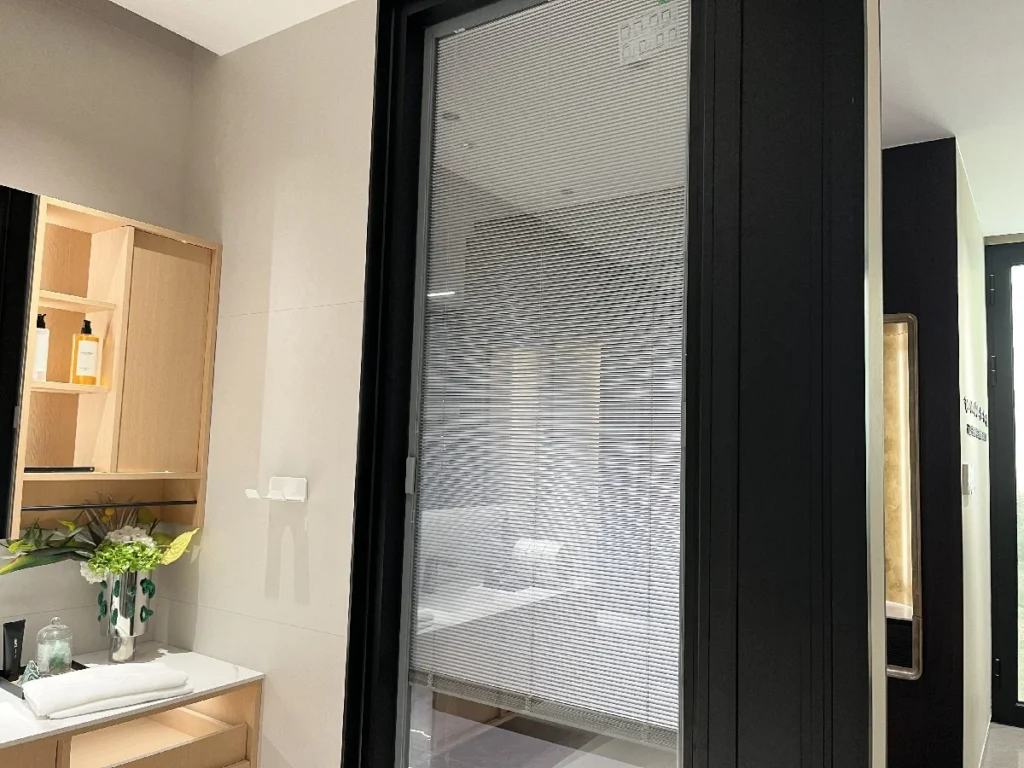
Louver windows are made up of horizontal blades that can be adjusted to control the amount of airflow. Their advantage is not just that they allow ventilation, but that they give more precise control over airflow direction, airflow speed, and privacy. This makes them especially practical in bathrooms, stairwells, and service spaces.
In an overall window ventilation design, louver windows are better used as an auxiliary ventilation component rather than the only main opening. They can maintain steady ventilation without fully exposing the interior, which is especially useful in spaces where privacy is important. However, traditional louver windows usually offer weak sound insulation, so for a bedroom facing the street, relying only on louvers is often not ideal.
11
Arched Windows
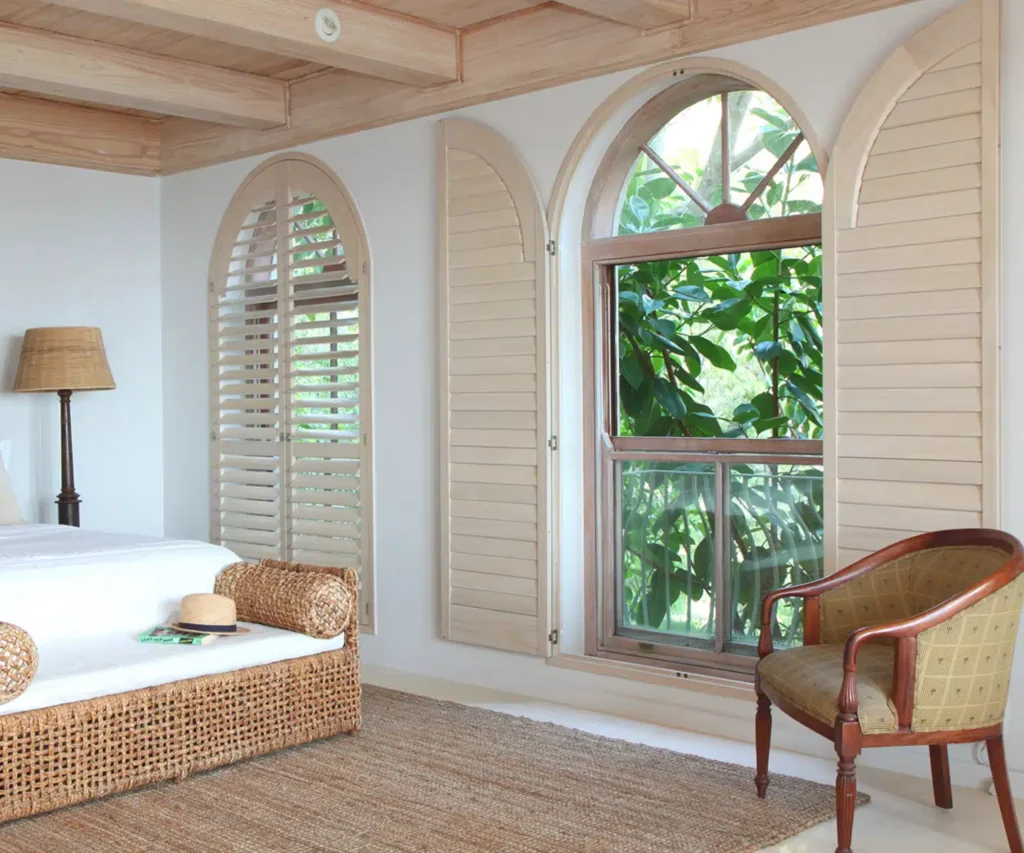
Arched windows are often paired with transom windows, and this combination is common on tall walls, in high-ceiling spaces, and on façades with strong decorative character. Visually, they add more layering and make use of upper wall space, giving warm air a chance to escape from a higher level.
In terms of ventilation, arched windows do not perform well simply because the shape is special. Their real value lies in the placement of high-level openings. If they are only fixed decorative features, their role is mainly visual and for daylighting. But if they are combined with operable transoms or side windows, they can better support high-low air exchange, which is especially helpful in large living rooms, stair halls, and atrium spaces.
12
Sliding Folding Windows
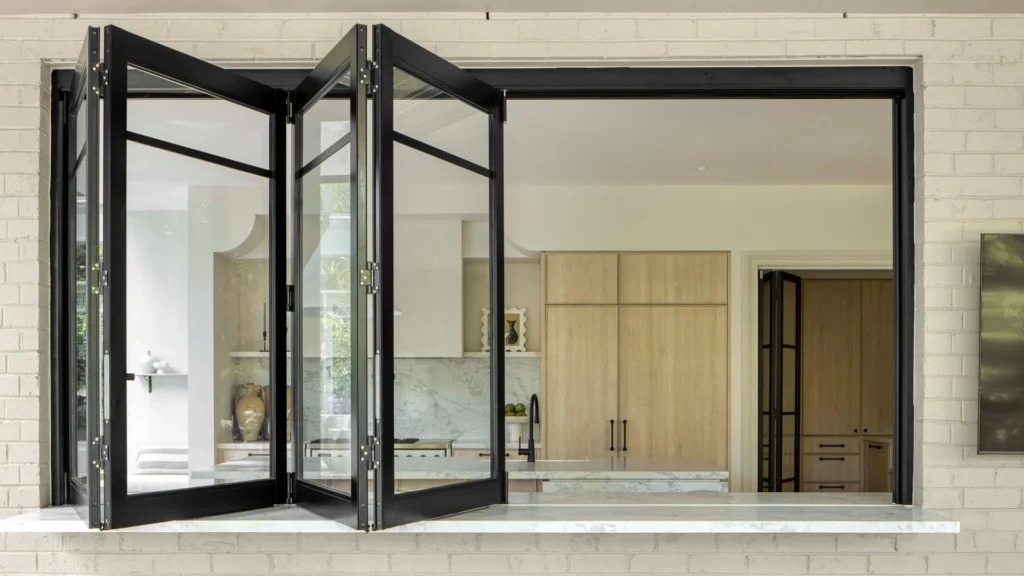
The biggest feature of sliding folding windows is that they can almost open up an entire wall. Once the interior and exterior are fully connected, both the ventilation intensity and the sense of spatial openness become very direct. For areas connected to balconies, terraces, or gardens, the user experience is often especially strong.
But the design challenge lies not only in “what happens when it is open,” but also in “how it works in everyday use.” These issues have more impact on real use than many people expect. For layouts that want to strengthen cross ventilation, this type of window can indeed create an excellent airflow path, but only when the details are carefully resolved.
13
Floor-to-Ceiling Windows
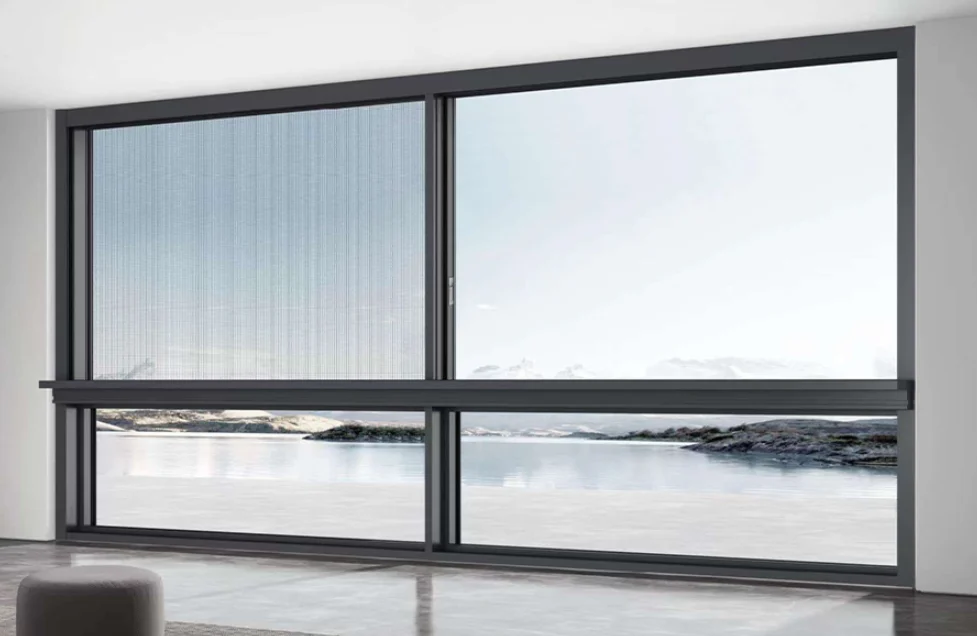
Floor-to-ceiling windows are usually fixed, offering wide views and abundant daylight, which is exactly why they remain so popular. They make a space feel more open and can noticeably improve indoor brightness. But when it comes to ventilation, floor-to-ceiling windows do not automatically have an advantage. Everything still depends on how the operable sections are designed.
If the design includes a large enough opening area, their air exchange capacity can indeed be very strong. But large openings also mean a higher risk of noise intrusion, especially in homes facing streets, elevated roads, or busy commercial areas, where it is not enough to focus only on “how wide it opens.” A more mature ventilator window design often uses a divided opening layout, where some sections are responsible for ventilation while other sections continue to provide sound insulation and thermal performance.
14
Acoustic Metamaterial Ventilation Windows
This is one of the more advanced product directions in recent years. It uses the principle of acoustic metamaterials, relying on specially designed microstructures to achieve the effect of “letting air pass while reflecting sound.” In other words, it aims to solve one of the most common and difficult contradictions: wanting ventilation without having to live with noise.
At present, this technology is still developing, and not all frequency ranges of noise can be handled equally well. But it has already shown potential in reducing medium- and high-frequency noise. As a ventilation window design direction worth watching in 2026, it may not yet be mainstream, but it is very likely to become an important option in high-noise environments.
15
Hybrid Ventilation Windows
Hybrid ventilation windows combine natural ventilation and mechanical assistance in one system. In simple terms, when outside conditions are favorable, they rely on natural airflow. When there is little wind, insufficient temperature difference, or unstable outdoor air quality, miniature fans or fresh air modules step in.
The value of this hybrid window does not lie in replacing traditional windows, but in improving the stability of the overall ventilation strategy. Especially in cities where air quality can fluctuate, or in living and working environments where windows stay closed for long periods, it makes ventilation less dependent on the weather and on user habits. For complex climate conditions, this is a very practical direction.
16
Modular Ventilation Inserts
Modular ventilation inserts are not an independent window type, but rather a way of upgrading existing windows. By adding modules with airflow guidance, filtration, insect protection, or acoustic treatment, the ventilation performance of the original window system can be improved without replacing the entire unit.
For older home renovations, apartment upgrades, or projects with limited budgets but a strong desire to improve comfort, this method is often very attractive. The entry barrier is relatively low, and the flexibility is high. By 2026, the market has already begun to offer products with custom sizes and integrated sensors, making this a very worthwhile upgrade path for existing homes.
Conclusion
Not every window type is right for every home. The best ventilation window design always depends on your layout, climate, noise conditions, and daily living habits. When these factors are considered together, it becomes much easier to create a home that feels fresher, quieter, and more comfortable.
If you are planning a new project or upgrading your current windows, PA Window can help you find the right solution for better airflow and long-term performance. Contact us to explore custom window designs for your home.
FAQs About Window Ventilation Design
There is no single best option for every home. Casement windows, tilt-and-turn windows, and corner windows usually perform well because they create a larger effective opening and help airflow move more naturally. The right choice depends on your layout, climate, and noise conditions.
Sliding windows can provide basic ventilation, but they are usually less effective than casement or tilt-and-turn windows because only part of the opening is usable. They are still a practical choice for many homes, especially when space-saving is important.
Windows placed on opposite or adjacent sides of a room work best for cross ventilation. Casement windows, corner windows, and folding window systems are often strong options because they help create a clearer airflow path through the space.
Start with the basics: room layout, local climate, wind direction, privacy needs, and outside noise. Once these are clear, it becomes much easier to choose a window type that supports better airflow and long-term comfort.
Yes, some window types are better suited for this than others. Awning windows, hopper windows, and tilt-and-turn windows in tilt mode can often stay open during light rain while still allowing air to move through the room.