Window trim doesn’t need to be complicated to make a room feel finished. Sometimes a wider board, a darker paint color, or simply letting the wood grain show is enough to completely change the window.
The best choice usually comes down to one question: Does the window trim feel like it belongs to the house?
Here are 15 window trim ideas that work across modern, farmhouse, Craftsman, traditional, cottage, and contemporary homes.
1
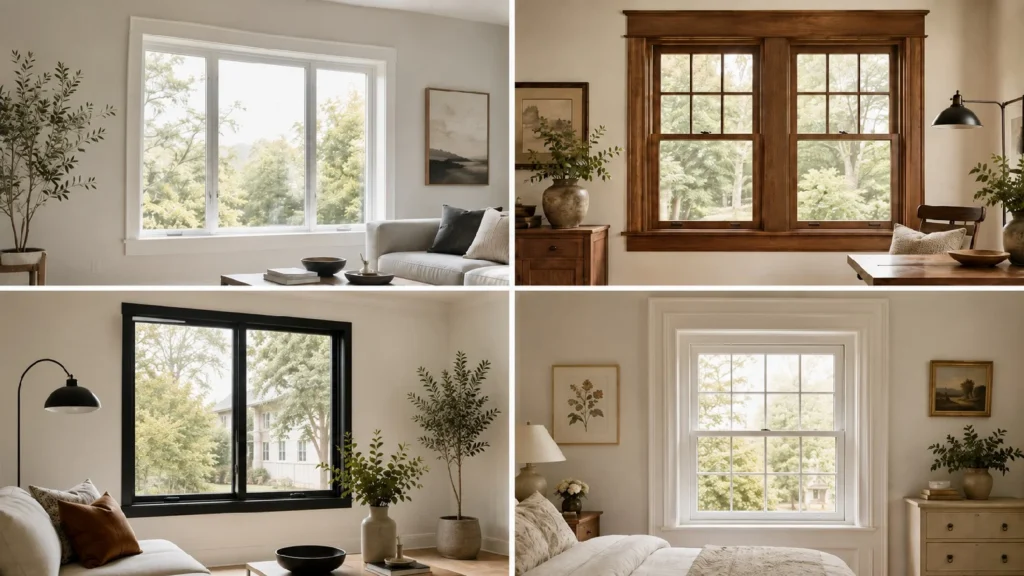
Craftsman-Style Trim
Craftsman window trim is one of the most recognizable styles in American home design. Known for wider casing, strong lines, and handcrafted details, it adds architectural character without feeling overly decorative.
Traditional Craftsman trim often features a larger top header and simple square edges that create a substantial look around the window. Inside, it brings warmth and craftsmanship; outside, it complements features such as porches, wood accents, and classic bungalow details.
Many newer homes also use Craftsman-inspired trim because it offers a balance between traditional charm and modern simplicity.
2
Modern Farmhouse Window Trim
Modern Farmhouse window trim combines clean lines with the warmth of traditional farmhouse design. Wide casing, square edges, white-painted boards, and natural wood accents are common elements.
The style became popular because it can make standard windows look more custom without adding complicated details. It pairs naturally with shiplap walls, neutral colors, exposed wood, and black window frames.
Whether used in a newly built farmhouse-style home or a simple renovation, this trim style creates a comfortable and timeless look.

3
Black Window Trim
Black window trim has become a defining feature in modern farmhouse, contemporary, and transitional homes. The dark color creates contrast and gives windows a stronger architectural presence.
Inside a home, black casing can turn a window into a visual focal point. Outside, it creates a sharper look when paired with white siding, brick, stone, or natural wood.
Because black is a bold choice, the surrounding materials matter. It works best when coordinated with other details such as doors, hardware, or exterior finishes.

4
Simple Flat Stock Window Trim
Flat stock window trim uses simple boards with straight edges to create a clean, modern frame around the window. Without decorative molding or layered profiles, it creates a more streamlined architectural look.
This style has become popular in contemporary homes because it is simple, flexible, and easy to customize. It can be painted white for a classic appearance, finished in natural wood for warmth, or paired with bold colors for contrast.
Flat casing is also a popular choice for homeowners who want a modern look without making the trim itself the main focus.
5
Classic White Trim
White window trim remains one of the most widely used choices because it works with nearly every home style.
A simple square profile can feel modern, while layered white molding works beautifully in Colonial, cottage, and traditional homes. The profile matters just as much as the color.
Pay attention to the undertone, too. Warm whites usually sit better with cream, beige, and natural wood; cooler whites create a cleaner contrast.

6
Natural Wood Trim
If the wood has beautiful grain, let it show.
Now natural wood trim has made a strong comeback as homeowners move toward warmer, more natural interiors. Instead of covering the material with paint, many designs highlight the grain and texture of oak, walnut, or reclaimed wood.
Light oak or maple feels calm and contemporary, while fir, pine, and darker stains can bring warmth to rustic or Craftsman interiors. Natural wood works best when it relates to something else in the room—flooring, cabinetry, beams, or furniture.
You don’t need an exact match. Similar undertones are usually enough.

7
Traditional & Colonial Window Trim
Traditional window trim focuses on proportion, symmetry, and architectural detail. Unlike simple flat casing, this style often uses layered profiles, wider headers, and subtle molding to create more depth around the window.
Colonial homes, Cape Cod houses, and many classic American residences commonly feature this type of casing. Today, designers also mix traditional trim with modern paint colors to create a transitional look.
A traditional window surround does not need to be heavily decorated. A well-proportioned casing with a simple header can add a custom-built feeling while keeping the home elegant and timeless.

8
Oversized Window Casing
Oversized window casing has become increasingly popular as homeowners look for ways to make windows feel more architectural. A wider trim profile can turn an ordinary window into a stronger design feature.
This approach works especially well with large windows, tall ceilings, and open-concept spaces where smaller trim may feel out of proportion.
Many modern farmhouse and Craftsman-inspired homes use oversized casing with simple square edges rather than complicated molding. The result is a bold but clean appearance that gives windows more presence without changing the window itself.
9
Picture Frame Window Trim
Picture frame window trim creates a finished look by framing the entire window with consistent casing on all four sides. The design is simple, but the symmetry gives the window a more intentional appearance.
This style has become popular in newer homes and house renovations because it provides a custom look without the complexity of traditional molding.
Many homeowners use picture frame trim with painted walls, accent walls, or built-in features to create a cleaner visual transition. It is especially effective in rooms where the window itself is meant to become part of the overall design.

10
Modern Minimalist Window Trim
Modern minimalist trim removes unnecessary details and focuses on clean architectural lines. Instead of decorative molding, the emphasis is on the relationship between the window, wall, and natural light.
Some designs use very narrow casing, while others create a flush transition between the window and surrounding surface.
This style is common in contemporary homes, modern renovations, and spaces inspired by Scandinavian design. The simplicity allows other elements — such as views, materials, and furniture — to take priority.

11
Decorative & Fluted Window Trim
Decorative window trim adds character through details that bring texture and craftsmanship back into the design. Fluted casing, for example, uses vertical grooves to create a subtle architectural pattern around the window.
Unlike heavily ornamented traditional trim, modern decorative styles often use small details as an accent rather than the main feature.
Fluted trim has gained attention in newer traditional homes, luxury renovations, and spaces that combine classic architecture with contemporary finishes.
12
Painted & Two-Tone Window Trim
Painted window trim allows homeowners to use color in a way that goes beyond traditional white casing. A contrasting trim color can highlight the shape of a window and add personality to a room.
Dark shades such as black, charcoal, and deep green are popular choices, while softer colors can create a more relaxed feeling.
Two-tone combinations are also becoming more common, such as dark window trim paired with light walls or painted casing that matches built-in cabinetry. The right color choice can make a standard window feel much more customized.

13
Trimless Windows
Sometimes the cleanest trim is almost no trim at all.
Trimless windows take the opposite approach from traditional casing by minimizing visible framing details. The goal is a smooth transition between the window and surrounding wall.
Trimless windows use drywall or plaster returns instead of conventional casing, allowing the wall to flow directly toward the glass. The look is especially effective around large picture windows in minimalist and contemporary homes.
One catch: the simpler the detail looks, the more precise the workmanship needs to be. Buy the way, While trimless designs create a high-end minimalist appearance, they require careful installation because the connection between the window and wall finish becomes much more noticeable.
14
Cottage & Coastal Window Trim
Cottage and coastal window trim focuses on a relaxed, comfortable style rather than formal architectural details. Simple casing, soft colors, and natural materials are common elements in beach homes, Cape Cod houses, and cottage-inspired spaces.
Many designs use white-painted wood trim to create a bright, airy feeling, while natural wood accents add warmth.
The charm of this style comes from its simplicity — it feels lived-in and welcoming rather than overly designed.

15
Brickmould & Exterior Window Casing
Brickmould and exterior window casing play an important role in defining the outside appearance of a home. Rather than being only a decorative element, these details help create a finished transition between the window and exterior materials.
Brickmould is commonly seen with brick, siding, and traditional American home designs. Wider exterior casing can add more character around replacement windows and improve curb appeal.
For homeowners updating their exterior, choosing the right casing profile can make new windows feel more connected to the original architecture of the house.
How to Choose the Right Window Trim Style?
| Home Style | Recommended Trim Style |
|---|---|
| Modern | Flat stock trim or minimalist casing |
| Contemporary | Black trim or clean modern casing |
| Craftsman | Wide square casing with strong headers |
| Modern Farmhouse | Wide white casing or simple flat boards |
| Traditional | Layered casing with classic molding |
| Colonial | Painted traditional trim details |
| Victorian | Decorative layered trim |
| Scandinavian | Light natural wood trim |
| Rustic | Stained wood or reclaimed wood trim |
| Coastal | White or soft-colored trim |
| Cottage | White, wood, or colorful casing |
The table is a guide, not a rule. Consider these factors when choosing a window trim style for your home.
Match the Trim to Your Home Style
Start with your home’s architecture. Clean, simple trim works well with modern designs, while wider profiles and more detailed casing complement Craftsman, farmhouse, and traditional homes.
Consider Color and Material
Trim color and material can change the entire look of a window. White trim creates a classic appearance, black trim adds contrast, and natural wood brings warmth and texture to the space.
Think About the Whole Home
Choose window trim that works with other details such as siding, doors, flooring, and interior finishes. A cohesive design makes the trim feel like a natural part of the home.
Conclusion
Good window trim should feel like it belongs to the house—not like an afterthought. Whether you prefer clean white casing, warm natural wood, a bold black frame, or a more minimal look, the best choice is the one that works with the architecture around it.
Looking for more window and home design inspiration? Contact PA Window for more ideas, practical design guidance, and solutions tailored to your space.
FAQs About Window Trim
Simple flat casing is one of the most versatile choices because it works with modern, transitional, Scandinavian, and even farmhouse interiors. Traditional homes may look better with wider or more detailed molding.
White is the most flexible option, while black creates stronger contrast. Natural wood adds warmth, and painting trim the same color as the wall creates a softer, more seamless look.
Clean and lightly sand the trim, repair any gaps, apply primer if needed, then paint with a quality brush. Two thin coats usually give the best finish.
There is no single perfect width. The right proportion depends on the size of the window, ceiling height, door casing, baseboards, and the overall style of the home.
Wood is a good choice when you want visible grain or a stained finish. MDF works well for smooth painted trim and is often more budget-friendly for interior applications.
Window trim is the broader term for the finished decorative elements around a window. Window casing usually refers specifically to the molding that covers the joint between the window frame and the wall.