
Looking for a front door that feels warm, welcoming, and full of character? A Craftsman door might be just what your home needs. Known for its timeless appeal and thoughtful details, this door style has remained a favorite for homeowners who appreciate a balance of simplicity, natural beauty, and craftsmanship. Let’s take a closer look at what makes Craftsman doors special and how to choose the right one for your home.
What Is a Craftsman Door?
A Craftsman door is a door style inspired by the American Arts and Crafts Movement, which gained popularity in the late 19th and early 20th centuries. The movement celebrated skilled workmanship, natural materials, and practical design, moving away from the overly decorative styles that came before it.
Craftsman doors became a natural fit for Craftsman-style homes, especially the popular American bungalow. Today, you’ll find them in everything from traditional houses to newer homes that want a little more warmth and personality. While the designs have evolved over time, the focus on simplicity, quality, and timeless appeal remains the same.
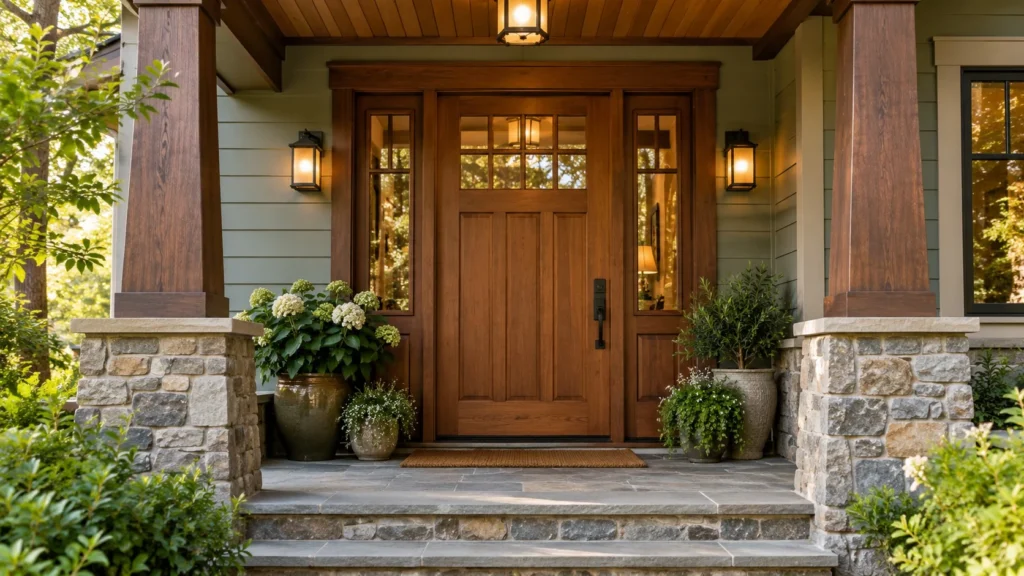
Key Features of Craftsman Style Doors
So, what makes a Craftsman style door easy to recognize? It’s usually the thoughtful combination of simple shapes, balanced proportions, and natural-looking details. Here are some features you’ll commonly find:
Simple, Clean Lines
Craftsman doors favor straight lines and well-balanced proportions over elaborate curves or excessive decoration. Their understated appearance gives them a welcoming, timeless feel.
Flat Panel Designs
Flat or recessed panels are a familiar feature. They create subtle depth and visual interest without making the door look too busy. Some designs use two or three panels, while others feature more elaborate panel arrangements.
Decorative Glass Inserts
Many Craftsman front doors feature glass in the upper section, often arranged in small rectangular or square panes. These inserts bring natural light into the entryway while adding a distinctive traditional touch.
Natural Wood Finishes
Warm wood tones are a classic choice for Craftsman doors. Finishes in oak, walnut, mahogany, and other rich brown shades highlight the natural grain and complement the style’s appreciation for authentic materials.
Dentil Shelves and Traditional Details
A dentil shelf is a small decorative ledge, often placed beneath the glass section of a front door. Its tooth-like detailing adds character and is especially common in traditional Craftsman designs. Not every Craftsman door has one, though, so it’s more of an optional finishing touch than a must-have feature.
Popular Types of Craftsman Doors
Craftsman design isn’t limited to one type of door. Whether you’re updating your entryway, refreshing your interior, or coordinating your home’s exterior, there are several options worth considering.
Craftsman Front Doors
A Craftsman front door is often the focal point of the home’s entrance. It commonly features recessed panels, upper glass inserts, and warm wood finishes. You can also choose sidelights to bring in more daylight and create a more open, welcoming entryway.

Craftsman Interior Doors
Craftsman interior doors carry the same clean lines and simple panel designs into your living spaces. They’re a lovely choice for bedrooms, hallways, home offices, and living rooms, especially when you want a consistent look throughout the house.
Depending on your needs, you can choose solid-panel designs for privacy or add glass panels to areas where you want a little more light.

Craftsman Double Doors
Need a wider entrance or simply love the look of a grand entryway? Craftsman double doors offer both. With two matching door panels, they create a balanced, symmetrical appearance that works particularly well for larger entrances.

Craftsman Garage Doors
Your garage door takes up a noticeable amount of your home’s exterior, so why not give it the same attention as your front entrance?
Craftsman garage doors often feature recessed panels, simple geometric windows, and wood or wood-look finishes. Some designs also borrow details from traditional carriage-house doors, such as decorative strap hinges and cross-bracing.
For a cohesive exterior, try matching the garage door’s color, panel arrangement, or window design with your Craftsman front door.

How Much Does a Craftsman Door Cost?
The cost of a Craftsman door can vary quite a bit depending on its material, size, design, and level of customization. A simple, standard-size door will generally cost less than a solid wood door with decorative glass, custom dimensions, and detailed finishes.
Here are some of the main factors that influence the price:
Material: Solid wood, fiberglass, steel, and aluminum come with different material and manufacturing costs.
Size and configuration: A standard single door is usually more affordable than a double door or an oversized custom design.
Glass options: Decorative, stained, and specialty glass can increase the overall cost.
Customization: Special dimensions, unique panel layouts, custom finishes, and hardware add to the price.
Installation: Labor, door frames, hardware, and any necessary structural adjustments should also be considered.
Best Materials for Craftsman Doors
The material you choose affects more than just the appearance of your Craftsman door. It also plays a role in durability, maintenance, insulation, and overall cost.
Here is a quick comparison of popular options:
| Material | Main Advantages | Things to Consider |
|---|---|---|
| Solid Wood | Natural grain, warm appearance, easy to refinish | Requires regular maintenance and moisture protection |
| Oak | Distinctive grain, strength, classic look | Can be relatively heavy and needs proper finishing |
| Mahogany | Rich color, attractive grain, elegant appearance | Usually a higher-cost option |
| Fiberglass | Low maintenance, good insulation potential, wood-like finishes | Appearance and customization depend on the product |
| Steel | Strong, secure, and generally cost-effective | Can dent, and damaged finishes may require attention |
| Aluminum | Lightweight, corrosion-resistant, and modern in appearance | Thermal performance depends on construction |
Craftsman Door Glass Styles
Glass is one of the details that can really change the look and feel of a Craftsman door. It brings daylight into your home, adds visual interest, and gives you some flexibility when it comes to privacy.
Here are a few popular options:
| Glass Type | Appearance | Best For |
|---|---|---|
| Clear Glass | Transparent and bright | Maximizing natural light |
| Frosted Glass | Soft, translucent appearance | Balancing light and privacy |
| Stained Glass | Decorative colors and patterns | Adding a traditional artistic touch |
| Decorative Glass | Various textures and designs | Creating a distinctive entrance |
| Divided Lite Glass | Glass divided into smaller panes | A classic Craftsman appearance |
For a traditional Craftsman front door, divided lite or decorative glass is a natural fit. If privacy is a bigger concern, frosted or textured glass can be a better choice. Clear glass works beautifully when you want to make the most of natural light.
You don’t have to stick to one particular pattern, either. The key is to choose glass that complements the door’s panel layout and the overall style of your home.
Craftsman Door vs. Other Door Styles

Not sure whether a Craftsman door is the right choice? It helps to compare it with a few other popular door styles.
| Door Style | Key Characteristics | Overall Look |
|---|---|---|
| Craftsman | Recessed panels, upper glass inserts, simple detailing | Warm, handcrafted, and traditional |
| Mission | Flat panels, strong geometric lines, minimal ornamentation | Simple and understated |
| Shaker | Clean, recessed center panels with minimal detailing | Minimalist and versatile |
| Traditional | Raised panels, decorative molding, and elaborate details | Classic and formal |
Craftsman vs. Mission Doors
These two styles are closely related because both draw inspiration from the Arts and Crafts tradition. However, Mission doors tend to have a more minimal, geometric appearance, while Craftsman doors often incorporate upper glass panels, dentil shelves, and additional wood detailing.

Craftsman vs. Shaker Doors
Shaker doors are known for their simple, clean panel designs. They’re generally more understated, with fewer decorative details. Craftsman doors share that simplicity but often have more distinctive glass arrangements and traditional architectural touches.

Craftsman vs. Traditional Doors
Traditional doors often feature raised panels, decorative moldings, and more elaborate designs. Craftsman doors take a simpler approach, focusing on natural materials, clean lines, and functional details.

How to Choose the Right Craftsman Door
Choosing the right Craftsman door doesn’t have to be complicated. Start by looking at your home’s architectural style. A traditional bungalow, for example, may look best with a warm wood finish and divided glass, while a newer home might suit a simpler Craftsman-inspired design.
Next, think about practical needs. Consider the door’s material, size, glass configuration, insulation, security, and maintenance requirements. If you’re choosing an exterior door, make sure it’s designed to handle your local weather conditions.
Finally, don’t overlook the smaller details. Hardware, color, finish, and panel proportions can make a big difference. If standard options don’t quite fit your vision, custom dimensions and design choices may be worth exploring.

How to Maintain Craftsman Doors
With a little regular care, your Craftsman doors can stay beautiful and functional for years. Maintenance will depend on the material, but here are a few simple habits to follow:
Clean Regularly: Wipe away dust and dirt with a soft cloth and a suitable cleaning solution.
Protect Wood Surfaces: Keep wooden doors properly sealed or finished to help prevent moisture damage.
Check the Finish: Look for peeling paint, fading, or worn areas, and refinish when necessary.
Inspect Hardware: Check hinges, handles, and locks to make sure everything works smoothly.
Care for Glass Panels: Clean glass inserts and inspect the surrounding seals for signs of damage.
Check Weatherstripping: For exterior doors, replace worn weatherstripping to help maintain a comfortable indoor environment.
A quick inspection every now and then can help you catch small issues before they turn into bigger repairs.
Where to Buy Craftsman Doors?
When shopping for Craftsman doors, it’s worth looking beyond appearance alone. Choose a reliable door manufacturer or supplier that offers quality materials, a good range of designs, and customization options to suit your project.
At PA Window, we offer door solutions to suit different home styles and project requirements. Whether you’re looking for a classic Craftsman front door or a more customized design, our team can help you explore suitable options for your needs.
Have a project in mind? Get in touch with PA Window to learn more about our door products and discuss the right solution for your home.
FAQs About Craftsman Doors
No. Besides solid wood, Craftsman doors are also available in fiberglass, steel, and aluminum, offering different levels of durability, maintenance, and design flexibility.
Oak, mahogany, and fir are popular choices. Each offers a different grain, color, and appearance, so the best option depends on your style and budget.
Absolutely! Their clean lines and simple designs work well in modern homes, especially when paired with contemporary finishes and glass options.
Craftsman doors often feature decorative glass and traditional details, while Shaker doors have simpler panel designs and a more minimalist appearance.
Yes. Many door manufacturers offer custom sizes, wood species, panel designs, glass patterns, finishes, and hardware to suit different homes and projects.


